Dashboard[01]
A cockpit for
a two-minute task
Changing a Saturday opening time means scrolling past theme options, widgets and plugin banners asking for an upgrade.
Ads and visibility: customers who are looking for your service now or don’t know about it yet.
01 Google AdsInquiries from people searching for your service right nowfrom $1,000/mo 02 Social media adsMeta, TikTok, LinkedIn: customers who are not searching yetfrom $600/mo 03 SEOHigher in Google and Maps without paying per clickfrom $750/mo 04 Visibility in ChatGPT and AIYour business in AI assistant answerspart of SEO 05 Amazon and marketplacesSell where customers already buywith a partnerThe place where a visit turns into an inquiry, and a system that doesn’t lose that inquiry.
01 Web designA website that turns visits into inquirieslanding from $1,000 02 Online storesCart, payments and shipping, ready for adsfrom $3,900 03 CRMNo inquiry gets lost in a phonesetup $3,000 04 Chatbots and AIThey answer customers, at night too$1,900 05 Email and SMSCustomers come back instead of forgetting youquoted individuallyPlan and tracking first, budget second. You know what works before you spend more.
01 Strategy and auditKnow where to spend the budget before you spend it$1,900 02 AnalyticsSee which ad brings in money$550 03 ConsultationsA call about your specific problem$65/h 04 Free auditA quick review and 3–5 priorities to start$0How your business looks and sounds before anyone calls you.
01 Social media managementProfiles that look like a real businesswith a partner 02 Creative and videoGraphics and videos that stop the thumbquoted individually 03 BrandingA logo and style that sets you apartwith a partner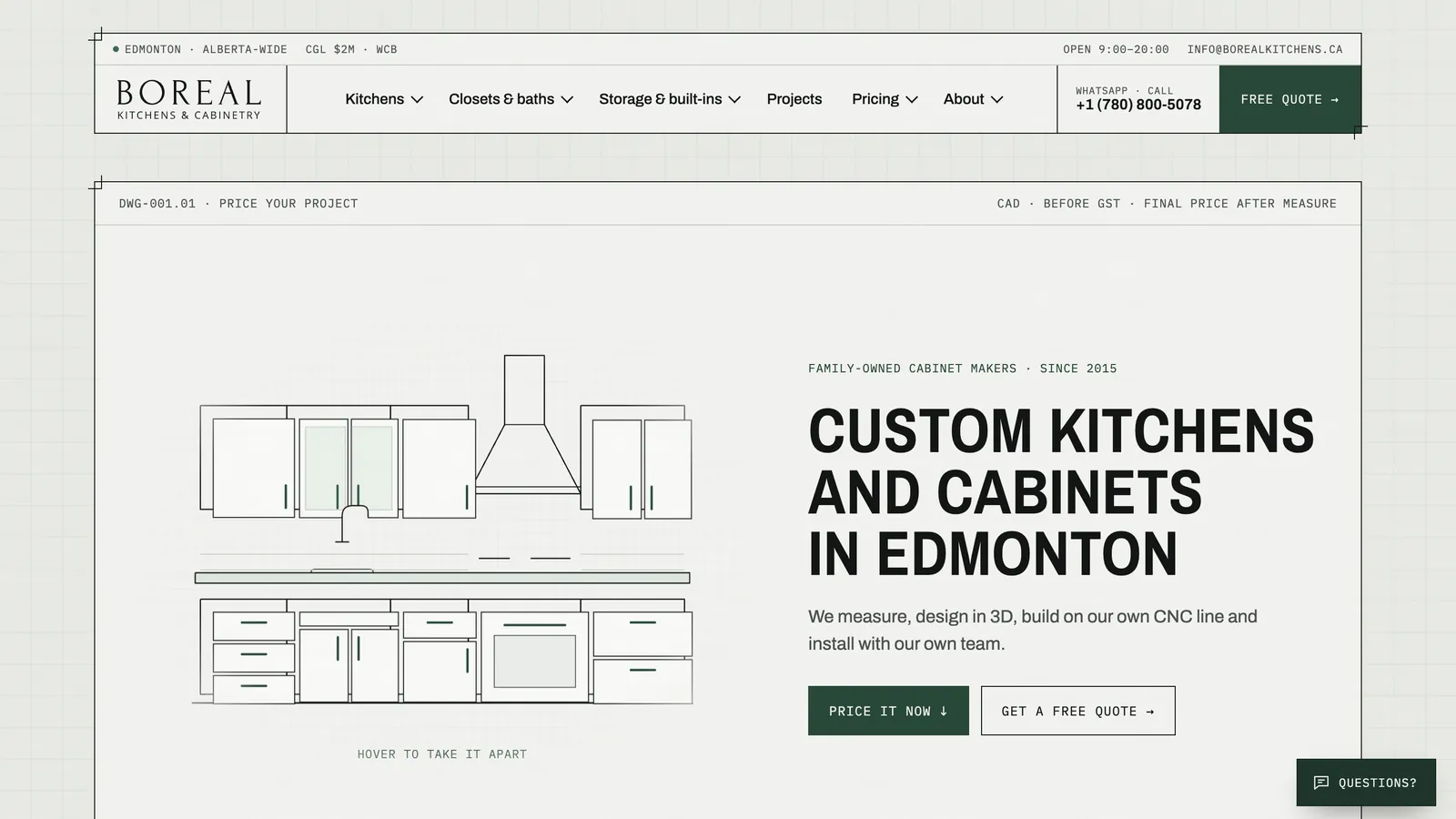 Edmonton, Canada
200 keywords on page one of Google
Boreal Kitchens
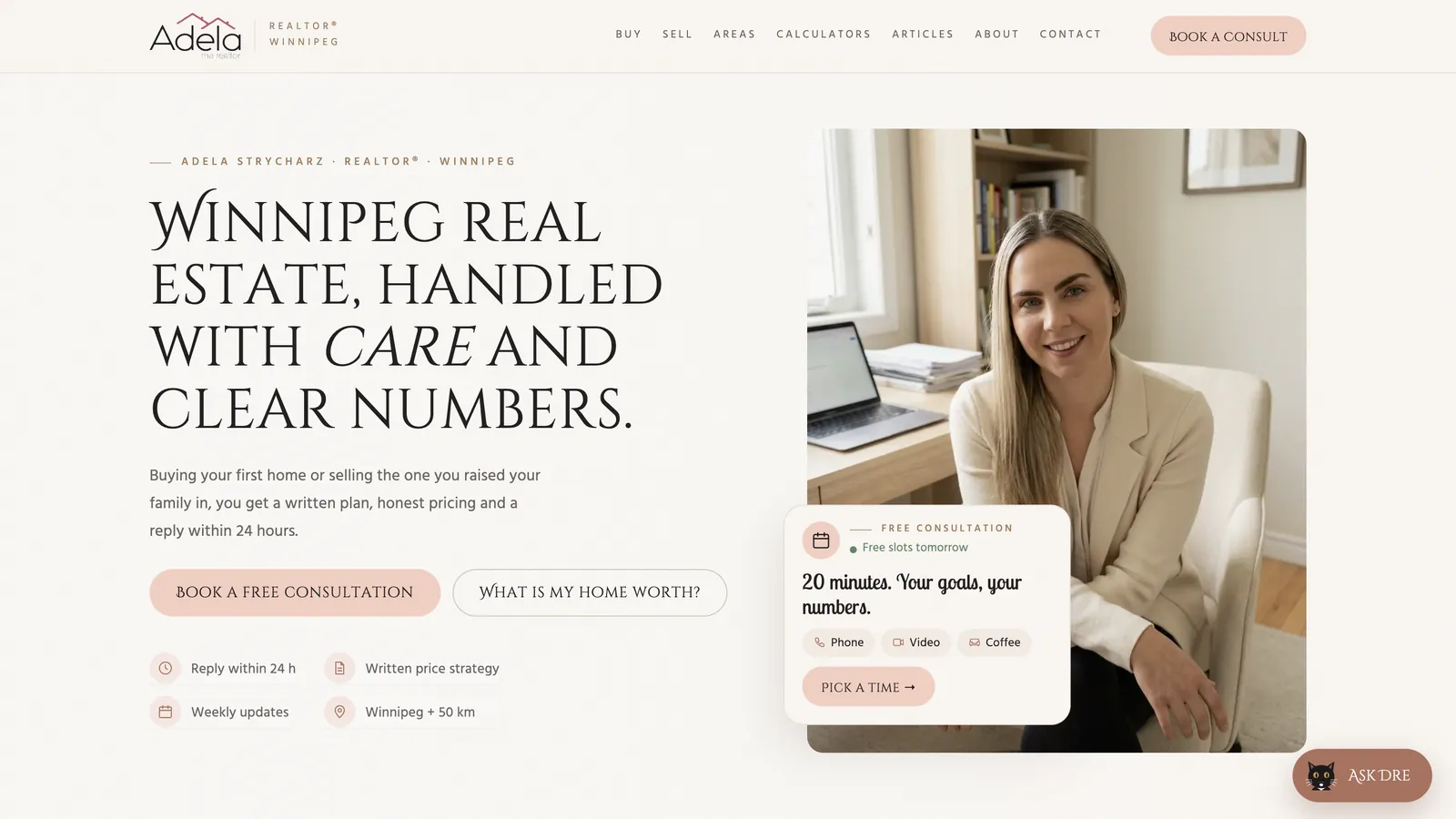 Winnipeg, Canada
up to 5 inquiries/mo from Google without ads
Adela Realtor
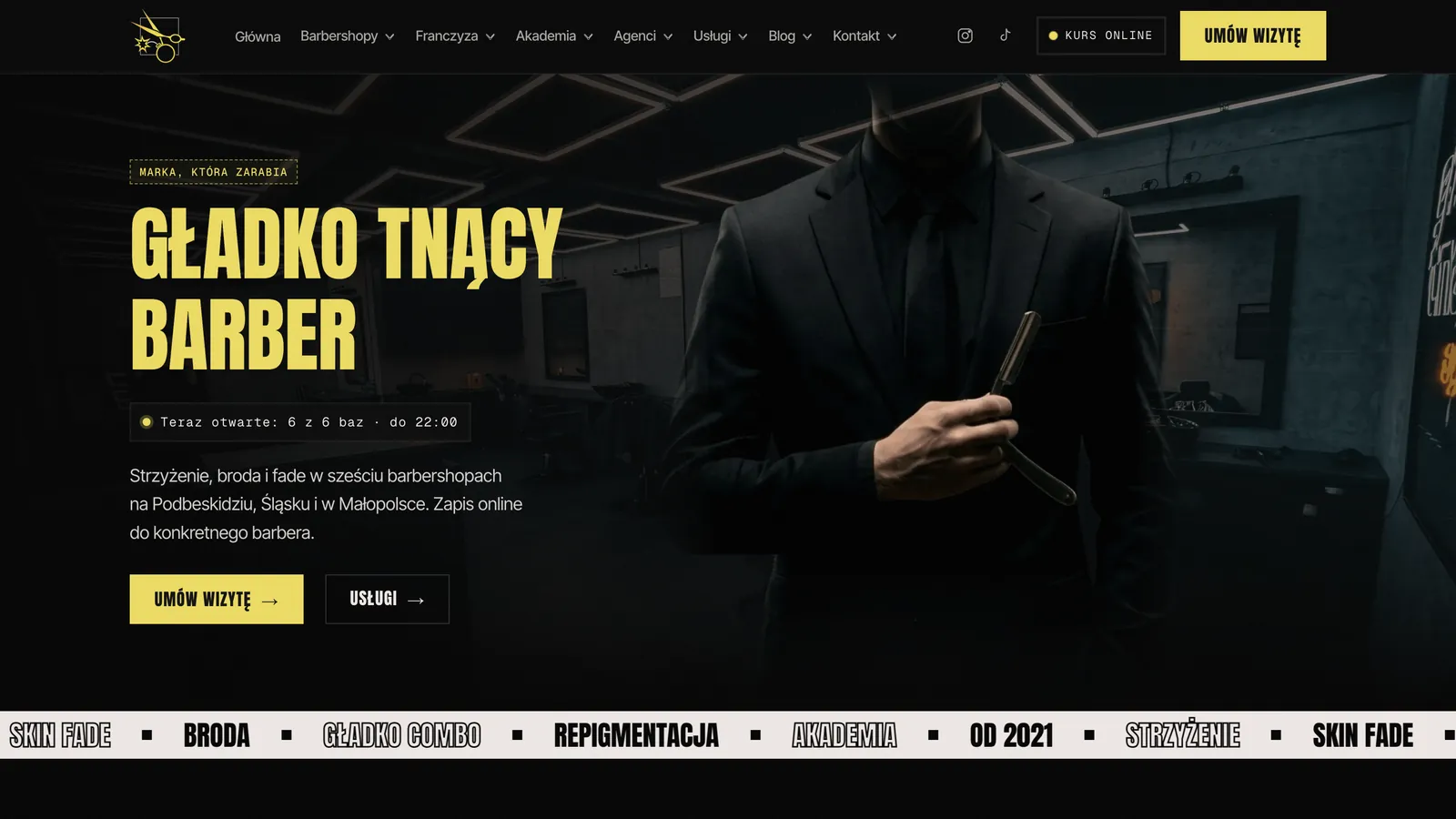 Żywiec, Poland
from 3 to 9 locations in two years
Gładko Tnący Barber
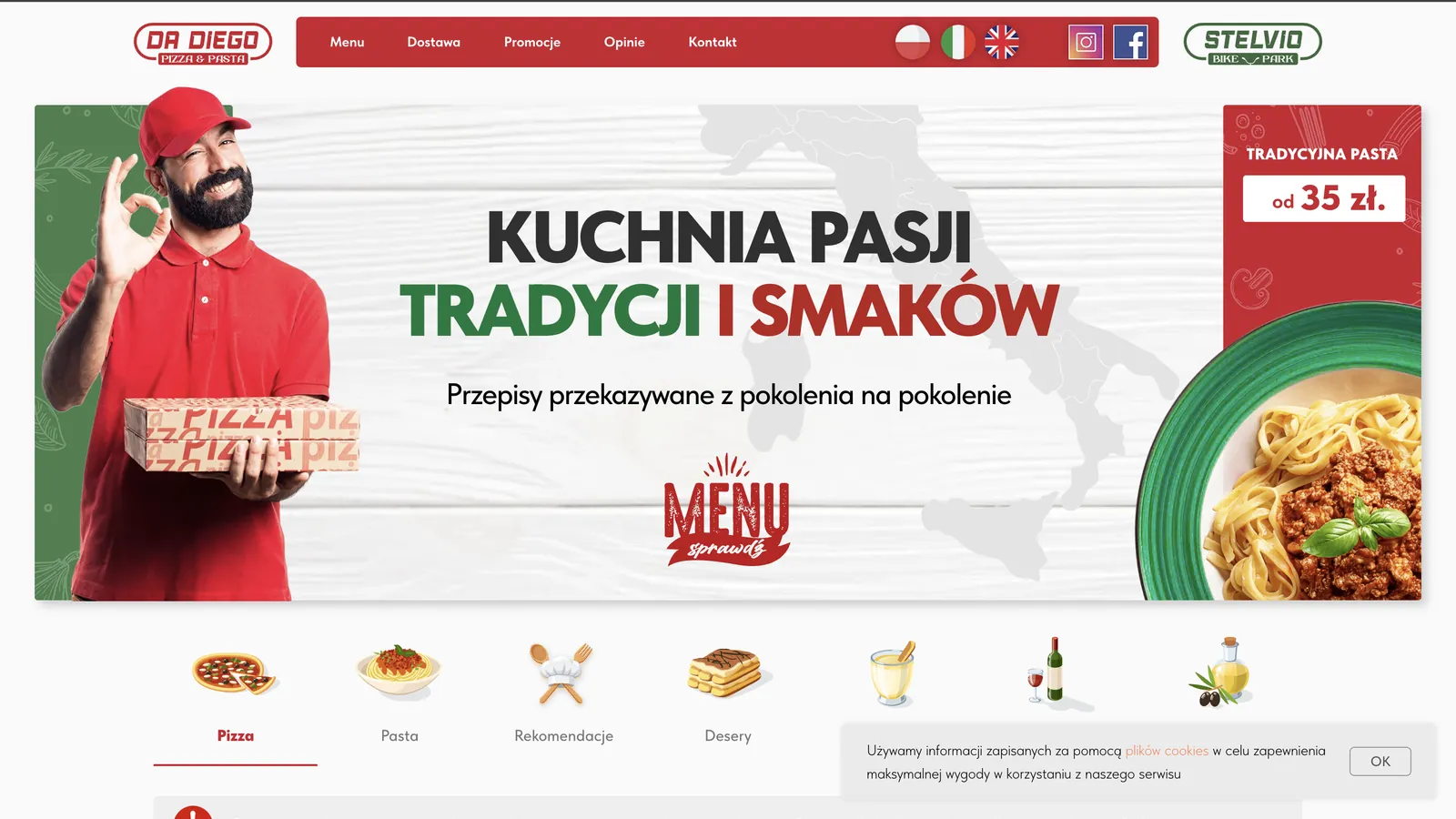 Żywiec, Poland
PLN 15 000 +/mo in delivery orders
Da Diego
A custom CMS website is a site plus an admin panel I design around your business: your services, your locations, your people, your price lists. Your front desk updates a promo in two minutes, and nobody has to wonder whether pressing "Update" will take the booking form down.
Free: a 30-minute call, an action plan and a price range in writing.

Once a business grows past a few pages, a general-purpose system often turns into something only one person dares to touch.
Changing a Saturday opening time means scrolling past theme options, widgets and plugin banners asking for an upgrade.
A security patch changes the header, another one kills the quote form, and you find out from a customer.
Providers who work at two locations, prices that vary by branch, projects filtered by material. Staff end up copying the same text into ten pages.
Every section of the panel exists because someone on your team needs it every week.
A remodeler sees "Projects" with room type and materials. A dental group sees "Dentists", "Locations" and "Insurance accepted". No generic posts bent out of shape.
Owner sees everything. The marketing person edits offers. Each branch manager can update only their branch.
A page can't go live with an empty title or description. URLs, social previews and redirects are handled in the same screen.
Form submissions are pushed to your CRM, inbox or a text alert directly, without a chain of connectors.
Every edit is logged with a name and a time, and an accidental change can be rolled back in one click.
The system is yours. There's no per-seat or per-month charge for using your own admin.
On Zoom we list what you edit, who edits it and how often.
I plan the pages and write the key texts; you correct and approve.
Layouts for the public site and the admin, with three rounds of revisions.
The CMS, the templates, forms, tracking and every redirect from your old site.
A recorded training call and a short guide written for your staff.
Prices in US dollars and fixed once quoted. The scope depends mostly on the number of content types, user roles and integrations.
For a business with many services, several locations or a large catalog.
If you need a few pages and only edit a handful of sections.
I recommend a custom CMS website when at least one of these is true. Several people need to publish: the owner, a marketing hire, managers at each branch. Your content has a structure that generic systems handle badly, like services priced differently by location, providers with their own schedules, or a portfolio filtered by material, budget and room. Or you're building a long-term search asset with dozens of service, city and article pages added over the years.
When none of those apply, the honest answer is a hand-coded website with a small edit panel. Same speed, lower price.
Picture a remodeling firm working across the Dallas–Fort Worth metroplex. Their admin might have four sections: Projects (photos, city, room, materials, budget band), Services (description, starting price, financing note), Service areas (each county or suburb with its own intro text) and Offers (seasonal promos with start and end dates that switch on and off by themselves). The office manager adds a finished bathroom in three minutes, and it shows up on the bathroom page, the right city page and the gallery at once.
Compare that with typing the same project into three places on a general platform and hoping the layouts match.
Popular platforms aren't bad. They're built for everyone, which means a lot of code you don't use and an ecosystem of add-ons maintained by strangers. With a developer watching it every week, that's fine. A busy owner usually doesn't have one, so the site slowly gets heavier, plugins drift out of date and something breaks at the worst moment.
A custom system removes the add-on layer entirely. The real risk moves somewhere else: depending on the person who wrote it. I handle that with documentation, standard tools and everything in your name from day one. There's a fuller, even-handed comparison in WordPress or a custom site.
Search engines are unkind to pages that differ only by a city name. In the CMS I build templates that pull shared data (prices, reviews, photos) while forcing a unique intro and local details on each page. Canonical tags, the XML sitemap and redirects update automatically when you publish or rename something. Franchise systems and chains have their own needs on top of that, covered on the multi-location websites page.
Because I wrote the system, wiring it to other tools is a direct integration rather than a plugin hunt. Common links: HubSpot, Pipedrive or Zoho, or a custom CRM if you have one with me; online booking; a text alert to the owner's cell phone for every new lead; GA4 events for calls and forms. More detail on the integrations page.
The admin and templates are built with accessible markup aimed at WCAG 2.1 AA, which is the usual reference in ADA website claims. The cookie notice can honor opt-outs where state privacy laws like California's apply, and forms that collect cell numbers for texts carry a consent checkbox you confirm with your attorney under TCPA rules. If you serve Spanish-speaking customers, the CMS can hold a second language; the Spanish copy itself comes from your translator.
You get a written agreement with deadlines, payment in three stages of 30/40/30 and three rounds of revisions; late-delivery penalties can be added to the contract. I'm based in Europe, so calls usually land in your morning, and messages get an answer within one business day. All website prices are on the website pricing page.
It's the back office of your website, written for your business only. A general platform ships with thousands of features for every possible site. A custom one has the five or eight sections your team actually uses, named the way you talk, with nothing else to click, update or secure.
No. The repository, database and hosting account are in your name, and the system uses a mainstream, documented stack another developer can learn. You can stop working with me at any time and the site keeps running. Management work with me has no minimum term anyway.
From $9,800 in US dollars. The quote depends on how many content types, roles and integrations you need, and it's fixed in a written agreement with deadlines. If a custom CMS turns out to be more than you need, a business website from $2,800 with a simple edit panel is the alternative.
I don't renovate the old system. I build the new one, move the pages and images worth keeping, rewrite what's weak and map every old URL to its new address with 301 redirects. That keeps the search value you've built and stops customers hitting dead links.
Three quick tests: more than two people edit the site, you run more than one location, or you plan to add pages every month for years. If none applies, a hand-coded site is cheaper and just as quick, and I'll tell you so.
A quick list is enough: what changes on your site, who changes it and how often. I'll come back within one business day with a scope and price range. Prefer to talk first? The 30-minute call is free.