Implants buried in a list
High-value treatments sit on one "services" page. Someone searching "dental implants cost" lands there, finds no answer and goes back to the results.
PagesAds and visibility: customers who are looking for your service now or don’t know about it yet.
01 Google AdsInquiries from people searching for your service right nowfrom $1,000/mo 02 Social media adsMeta, TikTok, LinkedIn: customers who are not searching yetfrom $600/mo 03 SEOHigher in Google and Maps without paying per clickfrom $750/mo 04 Visibility in ChatGPT and AIYour business in AI assistant answerspart of SEO 05 Amazon and marketplacesSell where customers already buywith a partnerThe place where a visit turns into an inquiry, and a system that doesn’t lose that inquiry.
01 Web designA website that turns visits into inquirieslanding from $1,000 02 Online storesCart, payments and shipping, ready for adsfrom $3,900 03 CRMNo inquiry gets lost in a phonesetup $3,000 04 Chatbots and AIThey answer customers, at night too$1,900 05 Email and SMSCustomers come back instead of forgetting youquoted individuallyPlan and tracking first, budget second. You know what works before you spend more.
01 Strategy and auditKnow where to spend the budget before you spend it$1,900 02 AnalyticsSee which ad brings in money$550 03 ConsultationsA call about your specific problem$65/h 04 Free auditA quick review and 3–5 priorities to start$0How your business looks and sounds before anyone calls you.
01 Social media managementProfiles that look like a real businesswith a partner 02 Creative and videoGraphics and videos that stop the thumbquoted individually 03 BrandingA logo and style that sets you apartwith a partner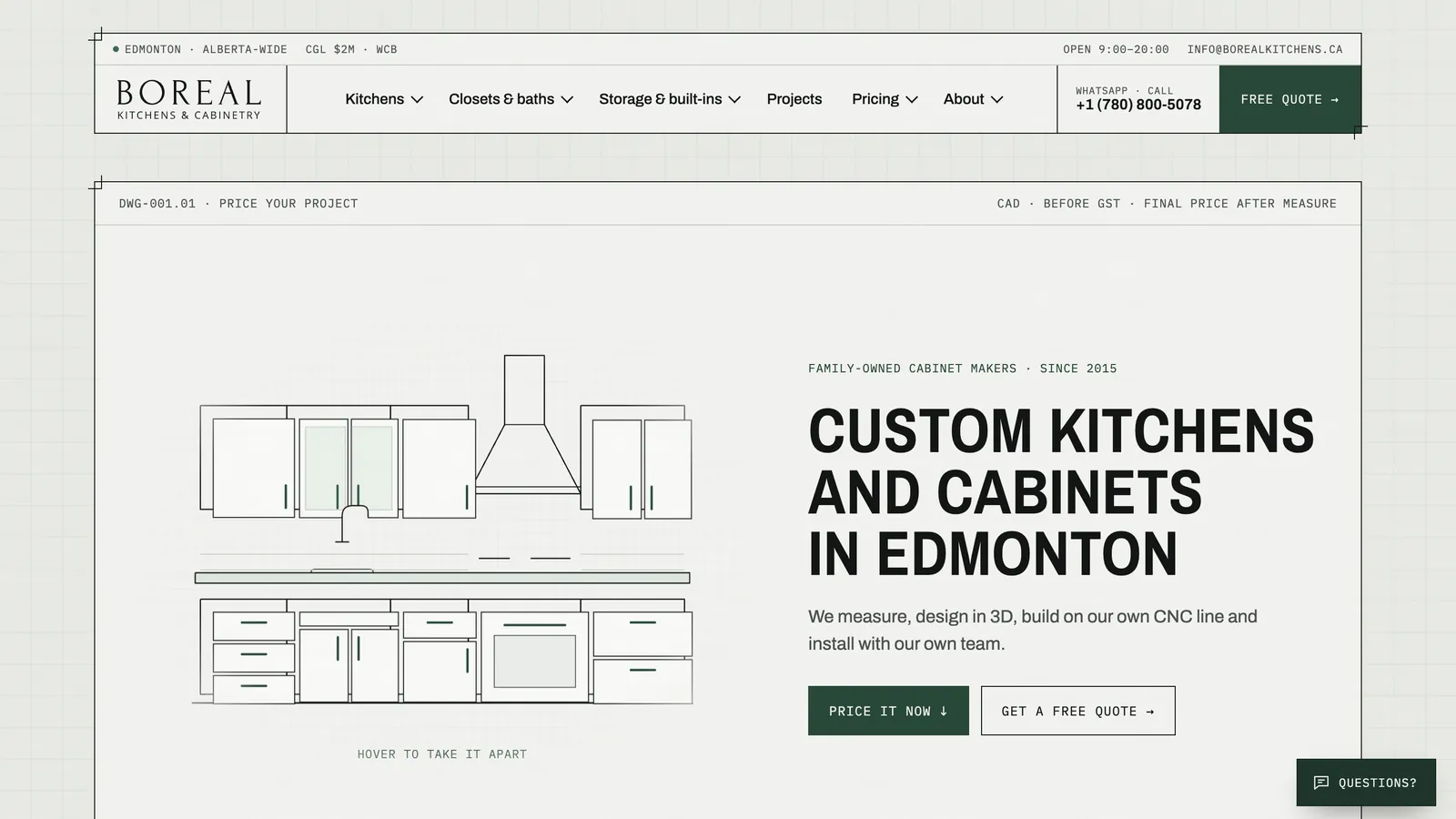 Edmonton, Canada
200 keywords on page one of Google
Boreal Kitchens
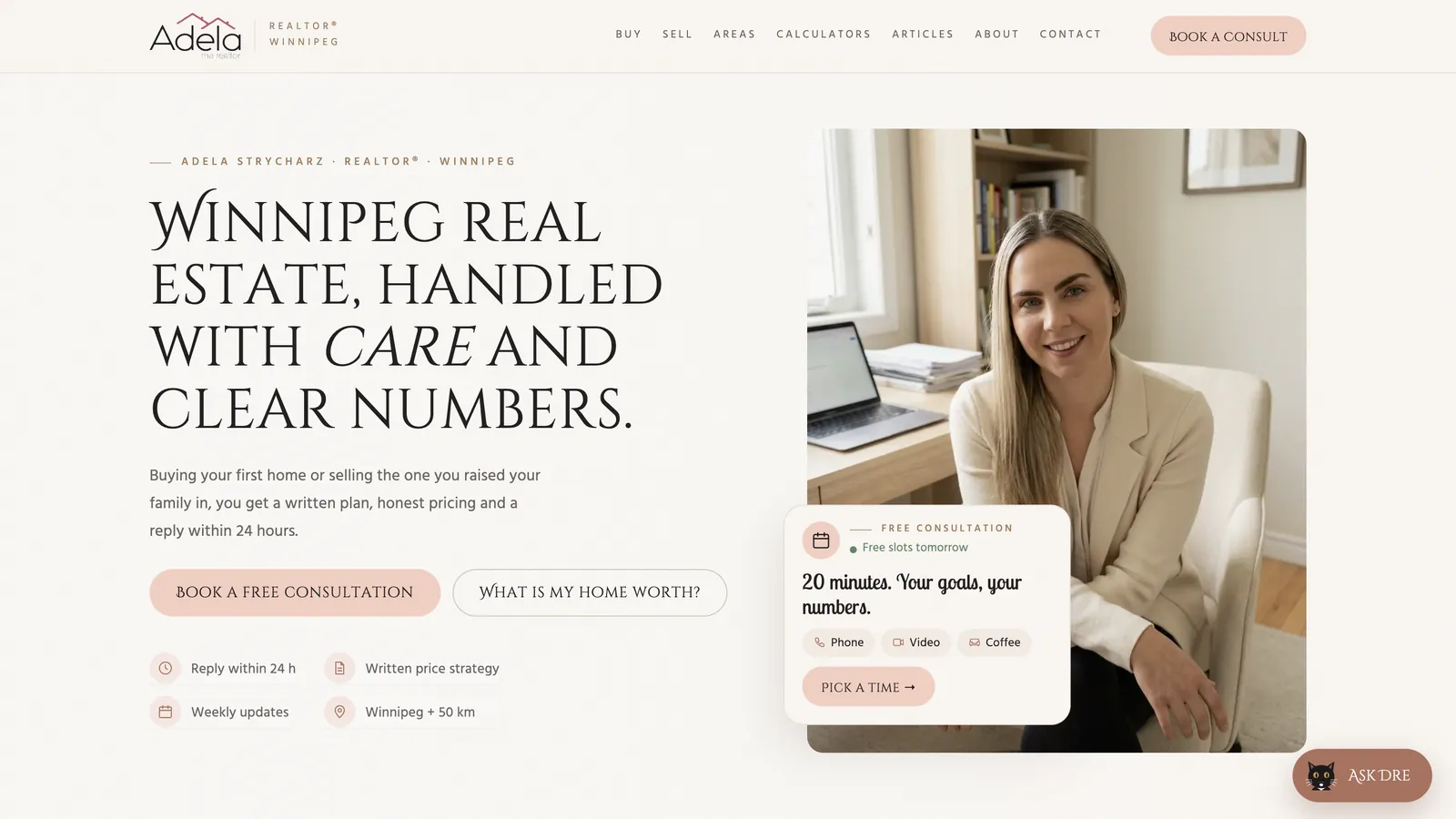 Winnipeg, Canada
up to 5 inquiries/mo from Google without ads
Adela Realtor
 Żywiec, Poland
from 3 to 9 locations in two years
Gładko Tnący Barber
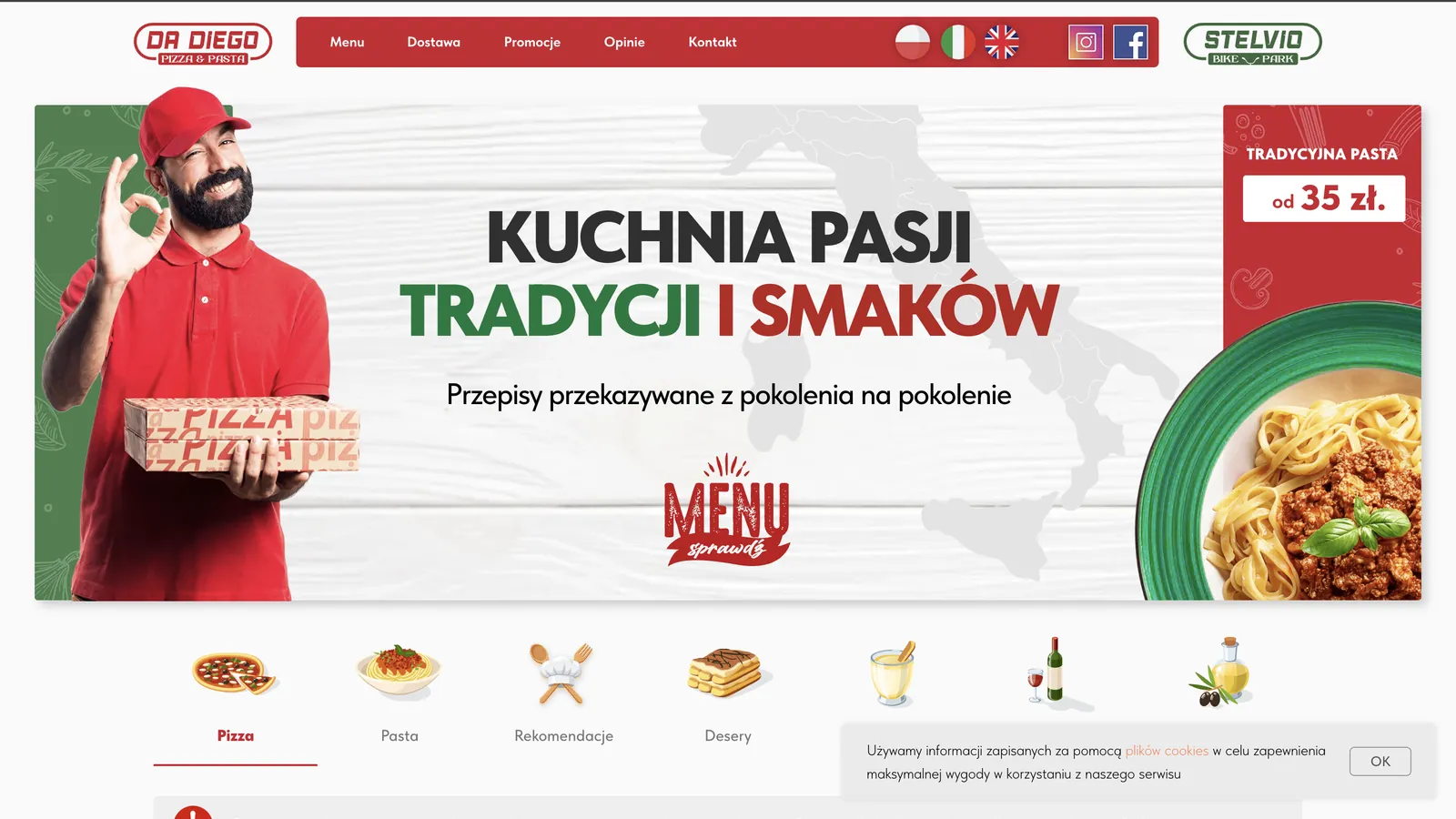 Żywiec, Poland
PLN 15 000 +/mo in delivery orders
Da Diego
Marketing for dentists that brings the cases your practice wants more of: implant consultations. Each treatment gets its own page, the Maps listing does the first selling, and ads only run where the numbers work.
Free: a 30-minute call, an action plan and a price range in writing.

Prices in US dollars, final. Google or Meta ad budget goes from your card straight to the platform.
A landing page for implants, aligners or emergency dentistry.
A practice website, Google Ads setup and full analytics.
Ongoing Google Ads work, checked every two weeks.
Customers book online at any time, and a reminder before the visit cuts down on no-shows.
High-value treatments sit on one "services" page. Someone searching "dental implants cost" lands there, finds no answer and goes back to the results.
PagesIf the site does not answer it, the patient calls, waits on hold or simply picks the practice that does answer it.
InsuranceSix-month cleanings slip because reminders depend on someone at the desk remembering to send them.
RecallMost new patients compare the top three practices on Google Maps. Reviews, photos of the office and accurate hours do much of the selling.
Implants, crowns, aligners, whitening, emergency care: each with process, typical fee range, financing and a booking button.
Ads on "emergency dentist open now" and implant searches, scheduled for hours when someone can answer the phone.
Email and text reminders with consent, plus a gentle message to patients who have not been in for over a year.
Website, booking per location, CRM and ads; the chain grew from 3 to 9 locations and ranks top 1–3 for "barber + city". Same local logic as a dental group.
See the case study →200 keywords on page one of Google in Canada. Big-ticket, considered purchases, much like implants.
See the case study →Marketing for dentists works best when it follows real searches. People rarely type "dentist" alone. They type "emergency dentist open Saturday", "dentist that takes Delta Dental", "dental implants cost", "Invisalign near me" or "kids dentist" plus a suburb. Each of those needs a page that answers the question in the first screen, with a phone number and a booking button right there.
The second filter is insurance. A short, current list of accepted PPO plans, a note on in-network versus out-of-network and a line on financing options turn a hesitant visitor into a caller. For patients without dental insurance, an in-house membership plan explained on its own page often works well, if your practice offers one.
Dental advertising in the US is regulated mostly at the state level. Boards usually prohibit false or misleading claims, and many limit who may call themselves a specialist. Before-and-after photos should be real cases with patient consent. Reviews must be genuine: the FTC rule against fake reviews applies to dental offices like everyone else, so I set up honest review requests and never buy or filter them. More on that in how to get more Google reviews.
On the tracking side, a dental site is a healthcare site. I keep ad pixels away from booking and patient forms and count conversions without sending health details to Google or Meta. Ask your compliance advisor to confirm the final setup.
Meta ads can help for aligners or whitening, with real photos and clear prices, but they rarely beat search for urgent needs.
Many patients have insurance benefits that reset on January 1, so October through December is a strong time to remind people to use what remains. January brings new deductibles and new plans. Summer is busy with kids out of school; back-to-school checkups fill August. I plan campaigns around those patterns.
The most expensive one is ads that run around the clock while the office is closed, so emergency calls at 9 p.m. go to voicemail and the click is wasted. The second is a booking form that asks for insurance member numbers before the patient has even chosen a time. The third is tracking that counts every page view as a "lead". Fixing those three often matters more than raising the budget.
I work remotely with practices across the US, for example in Dallas or Chicago. We talk on Zoom in your morning, I answer within one business day, and the contract states deadlines in writing. If you are not sure where to start, a free audit gives you three to five priorities.
A fee range usually helps. People searching "implants cost" want a number, and a range with "your exact fee after the exam" builds trust and filters out price shoppers. Check that the wording fits your state dental board rules and does not promise outcomes.
Usually only if a licensed specialist does the work. State dental boards and the rules on recognized dental specialties limit who can use words like "orthodontist" or "periodontist". I write copy that describes services accurately, and you confirm anything borderline with your board or attorney.
For implants, aligners and emergencies, often yes, because one case can cover a month of ad spend. For routine cleanings, Maps and reviews usually do better. I start with the cases where a single patient pays for the campaign, with a budget of about $1,500 a month or more.
Yes, with prior consent, opt-out keywords like STOP and carrier registration for business texting. Messages contain dates and times, not treatment details. TCPA rules change, so I keep the setup conservative and suggest a quick check with your attorney.
You do. Domain, website code, Google Ads, Analytics and Business Profile are registered in the practice's name. If we stop working together, you keep everything and give the next person access.
Implants, emergencies, aligners or new families: tell me which, and where your office is. I reply within one business day.
What do you need most?