Brand before evidence
Months on logo, deck and website, then a launch where nobody shows up.
OrderAds and visibility: customers who are looking for your service now or don’t know about it yet.
01 Google AdsInquiries from people searching for your service right nowfrom $1,000/mo 02 Social media adsMeta, TikTok, LinkedIn: customers who are not searching yetfrom $600/mo 03 SEOHigher in Google and Maps without paying per clickfrom $750/mo 04 Visibility in ChatGPT and AIYour business in AI assistant answerspart of SEO 05 Amazon and marketplacesSell where customers already buywith a partnerThe place where a visit turns into an inquiry, and a system that doesn’t lose that inquiry.
01 Web designA website that turns visits into inquirieslanding from $1,000 02 Online storesCart, payments and shipping, ready for adsfrom $3,900 03 CRMNo inquiry gets lost in a phonesetup $3,000 04 Chatbots and AIThey answer customers, at night too$1,900 05 Email and SMSCustomers come back instead of forgetting youquoted individuallyPlan and tracking first, budget second. You know what works before you spend more.
01 Strategy and auditKnow where to spend the budget before you spend it$1,900 02 AnalyticsSee which ad brings in money$550 03 ConsultationsA call about your specific problem$65/h 04 Free auditA quick review and 3–5 priorities to start$0How your business looks and sounds before anyone calls you.
01 Social media managementProfiles that look like a real businesswith a partner 02 Creative and videoGraphics and videos that stop the thumbquoted individually 03 BrandingA logo and style that sets you apartwith a partner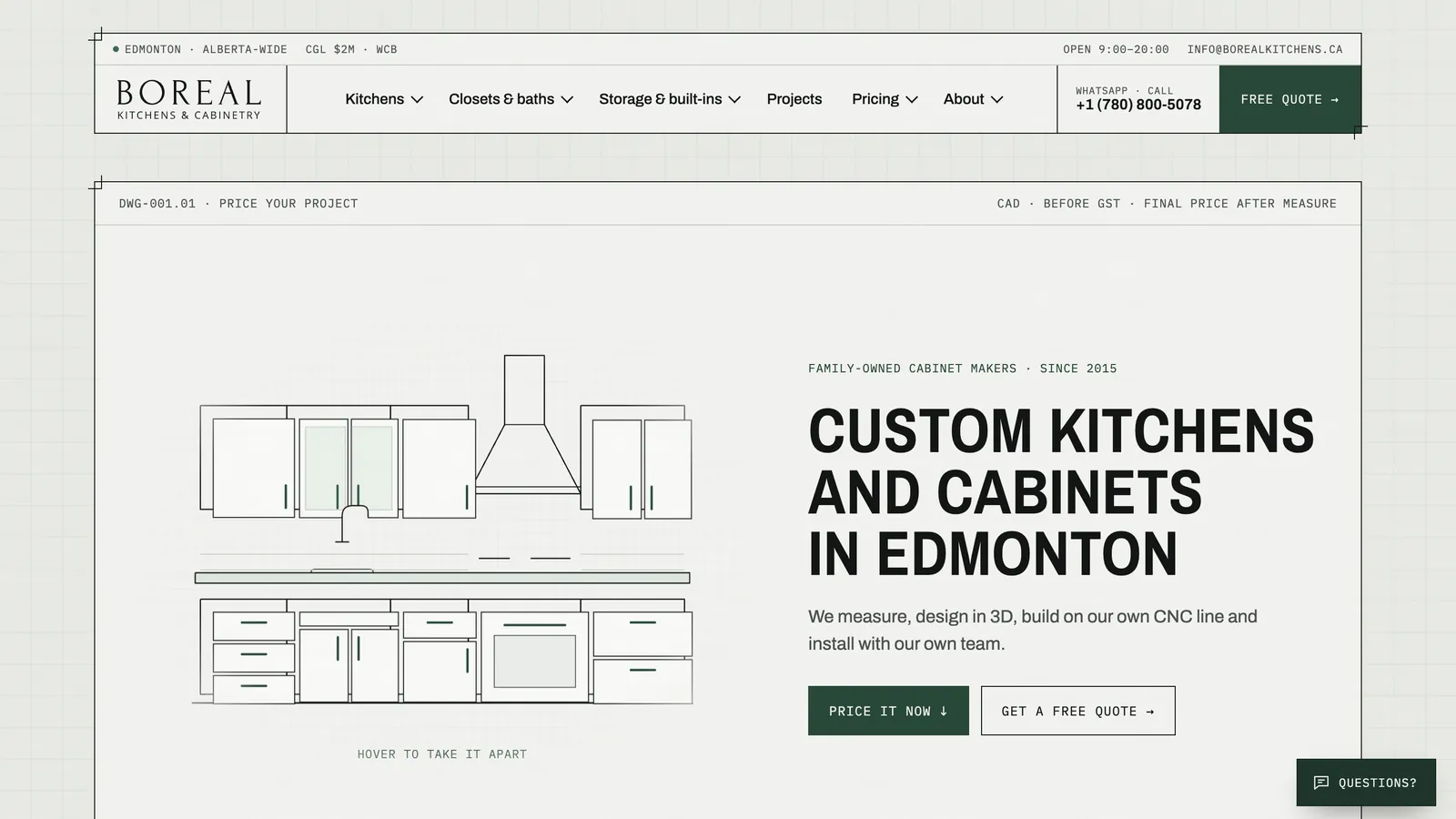 Edmonton, Canada
200 keywords on page one of Google
Boreal Kitchens
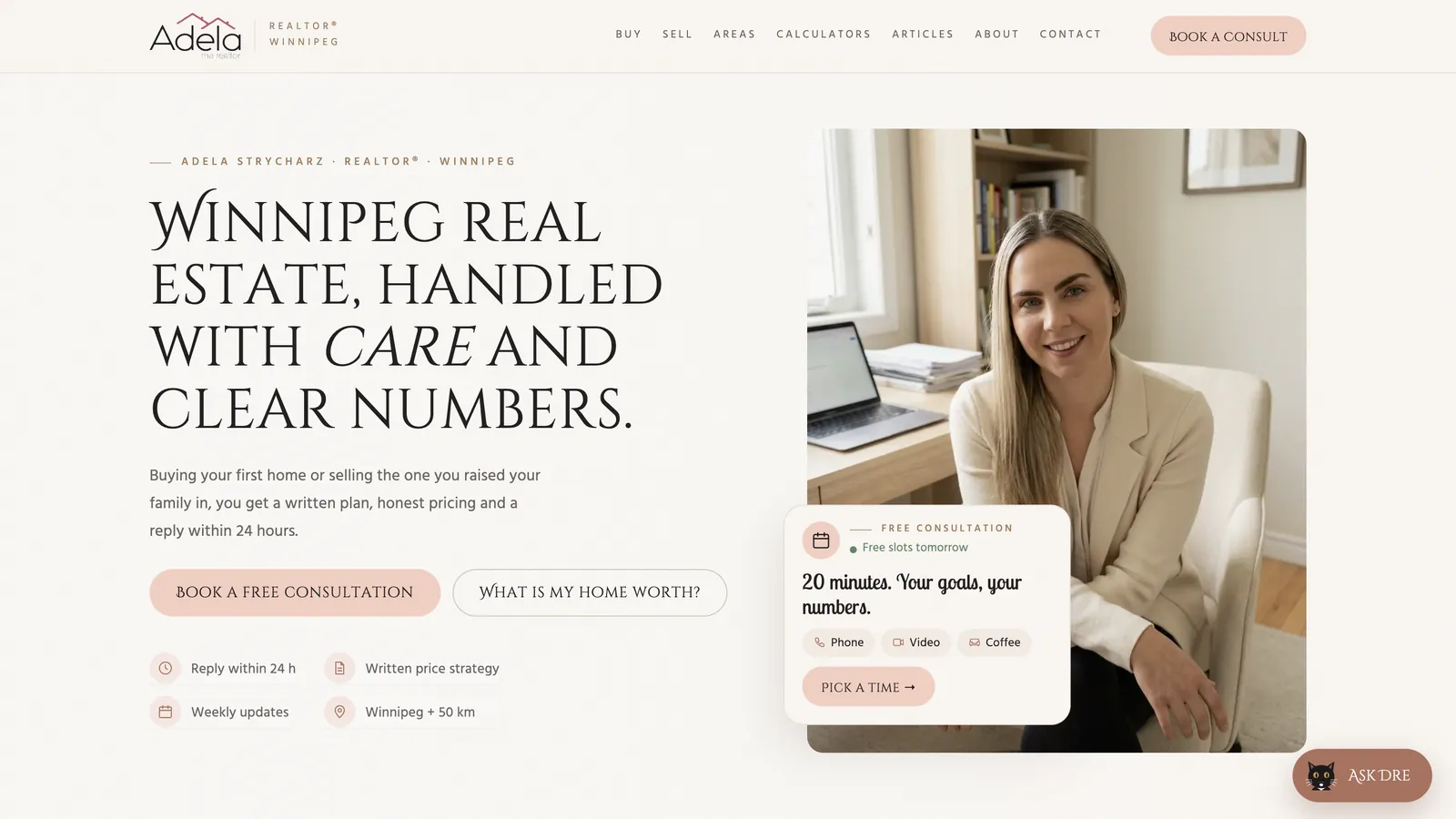 Winnipeg, Canada
up to 5 inquiries/mo from Google without ads
Adela Realtor
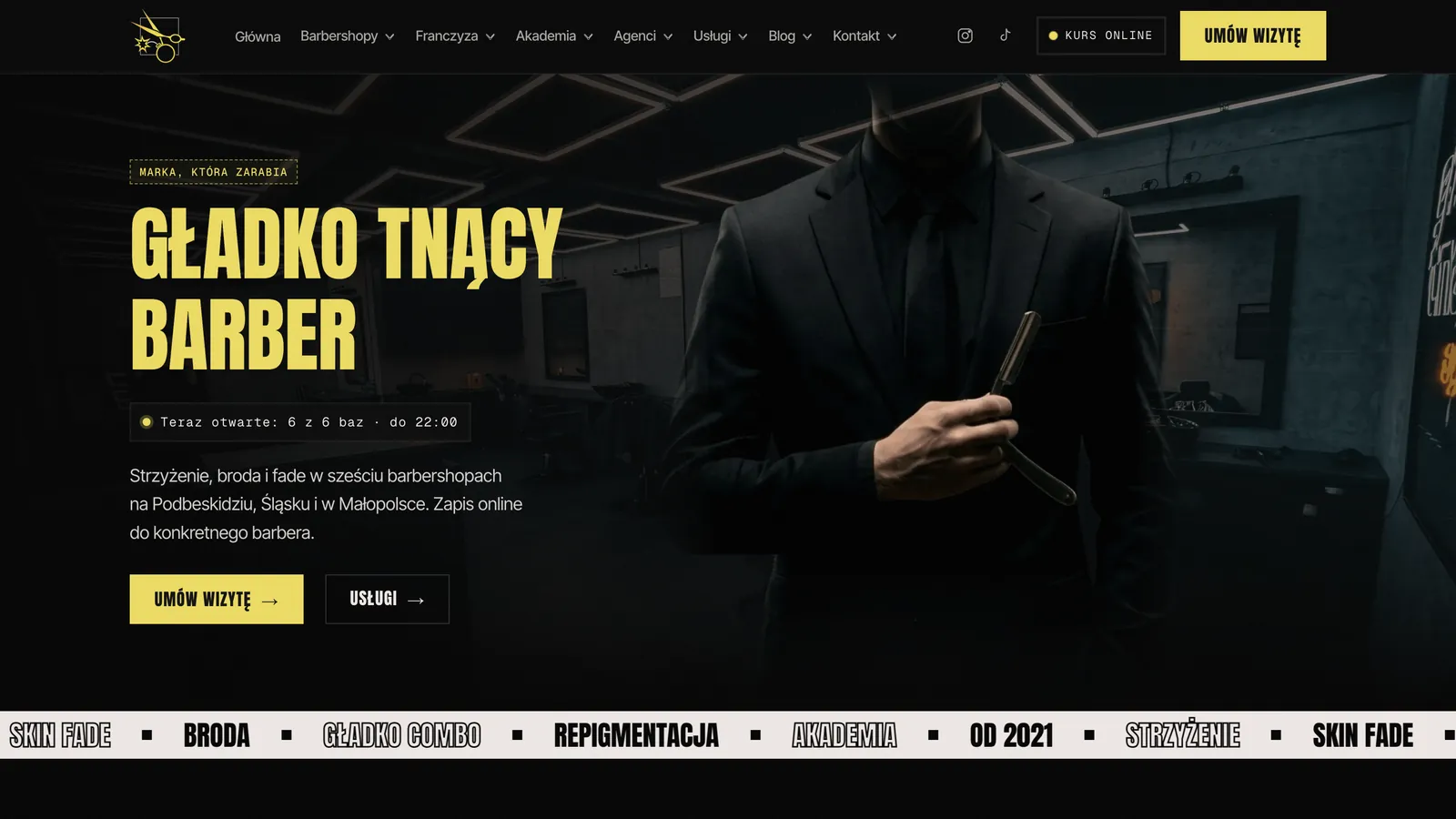 Żywiec, Poland
from 3 to 9 locations in two years
Gładko Tnący Barber
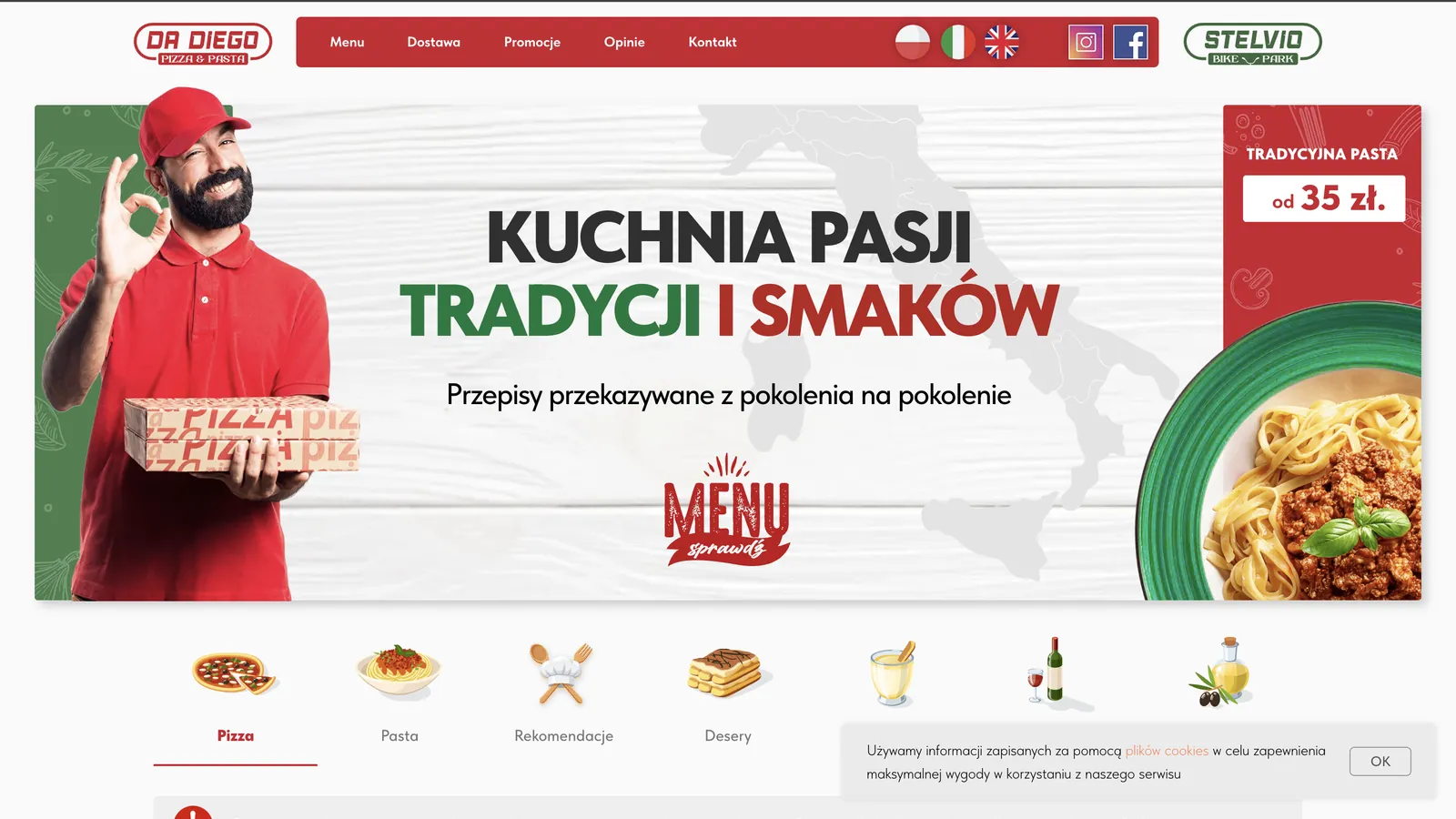 Żywiec, Poland
PLN 15 000 +/mo in delivery orders
Da Diego
Marketing for startups that answers "will anyone pay?" before you spend the round on it. Small tests, clean data, honest conclusions.
Free: a 30-minute call, an action plan and a price range in writing.

Months on logo, deck and website, then a launch where nobody shows up.
OrderAds run without conversion tracking, so the team argues about results instead of reading them.
DataA little TikTok, a little LinkedIn, a newsletter, a podcast. Nothing gets enough budget to prove anything.
FocusBefore calling, customers read reviews. I help you collect them and reply in a way that builds trust.
Each page tests one audience and one promise, with a clear call to action: waitlist, pre-order, demo.
Search and Meta tests with fixed budgets and stop rules, to compare messages and audiences.
GA4, Tag Manager and pixels set up before the first ad, with events that reflect real intent.
Posts, demos and honest build-in-public updates. Cheap, credible and hard for competitors to copy.
Final prices in US dollars, paid in stages, with the scope written down.
Landing page plus GA4, GTM and pixels: everything you need for the first test.
ICP, positioning, channels to test and a 90-day plan.
Review a plan, an ad account or a launch checklist.
Sales website, order CRM, ads and a bot for a young brand. The project has just launched; I'll share results once there are hard numbers.
See the case study →From expertise to a product: website, platform, ads and CRM, now with 500 students and courses sold for about $27,000.
See the case study →Marketing for startups is different from marketing for an established business. A dentist knows patients will come; the question is how many and at what cost. A startup often does not know yet who the customer is, which problem matters most to them or whether they will pay. Spending a seed round on a polished brand and a big launch before answering those questions is the most common way early marketing money disappears.
So early marketing works like a series of experiments. Each experiment has a hypothesis ("operations managers at mid-sized logistics companies will book a demo for automated dock scheduling"), a page that tests it, a small budget, a time limit and a decision rule written before it starts. I set these up and report the results plainly, including when the answer is no.
A test page is not a mini-website. It has one audience, one promise, one proof point and one call to action. I build landing pages from 10 days, hand-coded and fast, with tracking in place so every visitor's action is recorded. Two or three versions with different promises, sent the same kind of traffic, tell you more than a month of debates.
The call to action should match the commitment you need to see. A waitlist email is cheap to give. A pre-order, a refundable deposit or a booked demo with a decision-maker is a much stronger signal. If you take pre-orders, be clear about delivery dates and refunds; the FTC has rules on mail and online order delays.
Early on, pick one or two channels that match how your buyers already look for solutions. If people search for the problem, Google search tests intent fast. If the product is visual or the audience is defined by interests, Meta tests messages cheaply. If the buyer is a specific job title, LinkedIn can work, which I deliver with a trusted partner. Founder-led content on LinkedIn, X or YouTube costs time rather than money and builds credibility investors notice too. The 90-day marketing plan explains how to sequence it.
From the first ad, set up GA4 and Tag Manager with events that reflect real intent, UTM conventions everyone follows and a simple dashboard. Investors ask about acquisition cost and payback. Clean early data makes those answers credible and stops arguments inside the team.
Collect only the data you need, write an honest privacy policy and handle consent properly; California's privacy law and other state laws may apply once you grow. Marketing emails need CAN-SPAM basics, and texts need written consent under the TCPA. Avoid claims you cannot support, especially about AI capabilities, health or money. When in doubt, ask your attorney.
I work remotely with founders across the US, from San Francisco to Boston and Austin. We meet on Zoom in your morning; everything I set up is registered to your company, so the next hire inherits a clean account.
Enough to get a few hundred relevant clicks per variant, which depends heavily on the niche. In many US B2B categories that means at least $1,500 over a few weeks. Spending less often produces numbers too small to decide anything.
A weak one. Email sign-ups are cheap. Stronger signals are pre-orders, deposits, booked demos or people completing a long form. I design tests so the call to action matches the commitment you need to see.
I can run one or two channels as outsourced marketing from $600 a month each, and help with strategy on consultations. I'm a hands-on marketer, not a CMO who only writes decks; see fractional CMO vs hands-on marketer for the difference.
They can bring a spike of attention for tech products. Prepare a landing page with tracking and an email capture first, so the spike turns into a list you can follow up with.
Describe the product, the audience you suspect and your runway. I'll reply within one business day.
What do you need most?