Too many steps to pay
Forced account creation, long forms and shipping costs revealed only on the final screen.
CheckoutAds and visibility: customers who are looking for your service now or don’t know about it yet.
01 Google AdsInquiries from people searching for your service right nowfrom $1,000/mo 02 Social media adsMeta, TikTok, LinkedIn: customers who are not searching yetfrom $600/mo 03 SEOHigher in Google and Maps without paying per clickfrom $750/mo 04 Visibility in ChatGPT and AIYour business in AI assistant answerspart of SEO 05 Amazon and marketplacesSell where customers already buywith a partnerThe place where a visit turns into an inquiry, and a system that doesn’t lose that inquiry.
01 Web designA website that turns visits into inquirieslanding from $1,000 02 Online storesCart, payments and shipping, ready for adsfrom $3,900 03 CRMNo inquiry gets lost in a phonesetup $3,000 04 Chatbots and AIThey answer customers, at night too$1,900 05 Email and SMSCustomers come back instead of forgetting youquoted individuallyPlan and tracking first, budget second. You know what works before you spend more.
01 Strategy and auditKnow where to spend the budget before you spend it$1,900 02 AnalyticsSee which ad brings in money$550 03 ConsultationsA call about your specific problem$65/h 04 Free auditA quick review and 3–5 priorities to start$0How your business looks and sounds before anyone calls you.
01 Social media managementProfiles that look like a real businesswith a partner 02 Creative and videoGraphics and videos that stop the thumbquoted individually 03 BrandingA logo and style that sets you apartwith a partner Edmonton, Canada
200 keywords on page one of Google
Boreal Kitchens
 Winnipeg, Canada
up to 5 inquiries/mo from Google without ads
Adela Realtor
 Żywiec, Poland
from 3 to 9 locations in two years
Gładko Tnący Barber
 Żywiec, Poland
PLN 15 000 +/mo in delivery orders
Da Diego
E-commerce website design for small sellers who want their own store instead of renting one: product pages that load fast on a phone, a checkout without hurdles, shipping rules that match how you actually ship, and every order in one panel. No monthly platform plan, no app for every small feature.
Free: a 30-minute call, an action plan and a price range in writing.
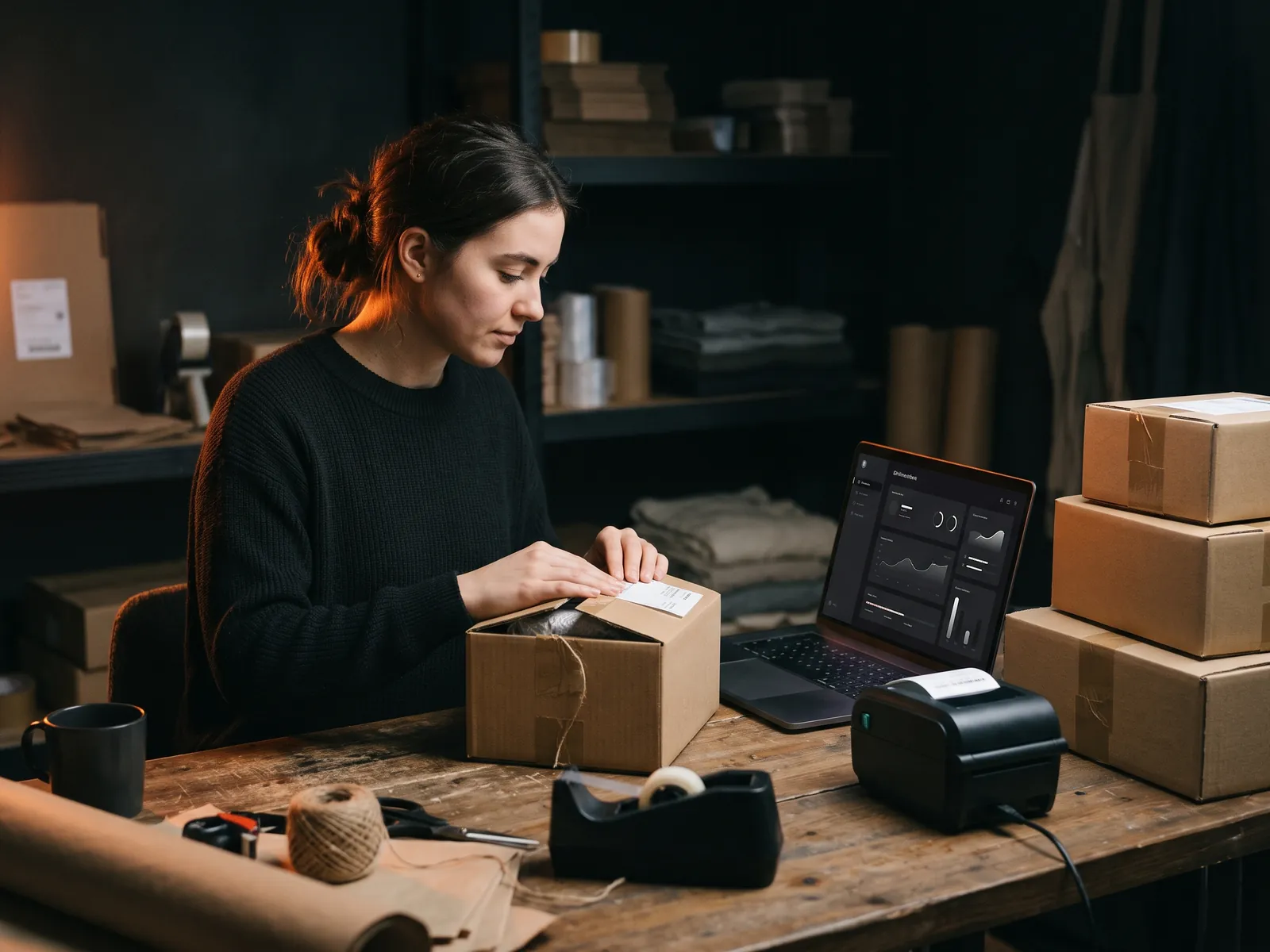
Small stores rarely lose sales on the homepage. They lose them in the last few steps.
Forced account creation, long forms and shipping costs revealed only on the final screen.
CheckoutHeavy photos and widgets. On a phone the gallery loads slower than the shopper's patience.
SpeedEmails, a spreadsheet, the payment dashboard and DMs. Something always slips through.
OperationsVariants, sizes, materials, bundles, made-to-order items: fields designed for what you sell.
Guest checkout, address autocomplete, card payments and wallets like Apple Pay and Google Pay through a payment provider.
Rates by zone or zip code, local pickup and delivery areas, free-shipping thresholds.
New, paid, packed, shipped: one screen for every order, with customer notifications.
Shipping and any mandatory fees visible before the last step, not sprung at checkout.
Product feed for Google Shopping, purchase tracking for Google and Meta.
What you sell, how you ship and how orders are handled today.
Categories, product page template, policies, about and FAQ.
Mobile-first product and checkout pages, three rounds of revisions.
Custom CMS store, payment provider, shipping rules and tracking.
Test orders, a Zoom session and support after launch.
A site with its own online ordering, CRM and ads. Over PLN 15,000 a month in delivery orders flows through it, and it's #1 on Google for "pizza Żywiec".
See the case study →A sales website with an order CRM, ads and a bot. The project has just launched; I'll share results once there are hard numbers.
See the case study →Final prices in US dollars. Payment processing fees go to your payment provider; hosting is agreed individually.
Catalog, checkout, shipping rules and order panel.
Shopping or Performance Max campaign set up for your store.
Customers and orders in a CRM for repeat sales.
E-commerce website design for a small seller is a different job from building a giant retailer's store. You don't need a thousand features. You need a catalog that describes your products properly, pages that load fast on a phone, a checkout that doesn't scare people off and an order panel that keeps you sane during the holiday rush. Everything else is noise.
I build stores on a custom CMS made for your products. A candle maker needs scents, sizes and gift bundles; a furniture workshop needs materials, dimensions and lead times; a coffee roaster needs grind options and subscriptions. The admin uses those words, not generic "attributes".
The product page does the selling a shop assistant would do in person. It needs several sharp photos, including scale and detail shots; a short description that answers "will this work for me?"; specifics like dimensions, materials and care; shipping time and cost before the cart; and reviews you actually received. The FTC's rule against fake reviews has been in force since late 2024, so I only display genuine ones.
Speed matters even more here than on a service site, because shoppers compare tabs. Images are generated in several sizes and modern formats and load as people scroll. Good product photography makes a bigger difference than any design trick.
Most abandoned carts come from surprises and friction: forced account creation, a long form, a shipping charge revealed on the last step. My checkouts allow guest purchases, autocomplete addresses, accept cards and wallets like Apple Pay and Google Pay through a payment provider, and show shipping and any mandatory fees before the final screen. Some states, California among them, restrict drip pricing, and honest totals simply convert better anyway.
Shipping rules should match how you really ship. That can mean flat rates, zone- or weight-based rates with USPS, UPS or FedEx, free shipping above a threshold, local delivery within certain zip codes or pickup at your workshop. Perishable or heavy goods may need restricted areas or delivery days. I set the rules up in the admin so you can adjust them before peak season, without a developer.
Every order lands in one panel with its status: new, paid, packed, shipped. Customers get automatic confirmation and shipping emails. For repeat sales, orders can flow into a CRM where you see each customer's history and send follow-ups; post-purchase emails must respect CAN-SPAM, and texts need TCPA consent. Thanksgiving week, Black Friday and Cyber Monday, and the December holidays are where small stores make much of their year, so the store is load-tested and the order flow rehearsed before November.
A store without traffic is a warehouse. The usual first channels are Google Shopping and Performance Max, Meta ads with a product catalog, and SEO for category and product pages. The store is built ready for all three: a product feed, purchase tracking with values and clean, crawlable category pages. See e-commerce SEO and marketing for e-commerce for the next steps.
An online store starts at $3,900, with copy for key pages, design, build, payments, shipping rules, tracking and training. You pay in three stages, own the code and the domain, and pay no monthly platform plan. If you're not sure you need a full store yet, a single product landing page can test demand first. Other website types are on the web design overview.
With me, an online store starts at $3,900 in US dollars, fixed in writing and paid in stages. That includes the catalog, product page template, checkout, shipping rules, order panel, tracking and training. Large catalogs or complex integrations are quoted after a short call. Payment processing fees go to your provider.
Hosted platforms are a fine start for many sellers. The trade-offs grow with you: monthly plans, paid apps for small features, transaction fees on some plans and limited control over speed and design. A store I build has no platform plan, and the code is yours. If a hosted platform suits you better, I'll say so.
Through a payment provider such as Stripe or PayPal: major credit and debit cards, Apple Pay and Google Pay, and often buy-now-pay-later options depending on the provider. Card data is handled by the provider, not stored on your site.
Yes. The admin lets you add products with photos, variants, prices and stock, change categories and run sales. I train you on Zoom at launch. Photos uploaded from your phone are resized automatically for fast pages.
The store can hold a second language. I write and build in English; Spanish product copy and pages would come from your team or a translator. I'll set up the structure so both versions stay in sync.
Tell me what you sell, roughly how many products, and how you ship today. I'll reply within one business day with a plan and a price. The first 30-minute call is free.
What do you need most?