"Quality, innovation, service"
The site says nothing an engineer can use: no tolerances, materials, machine list, part size limits or lead times.
WebsiteAds and visibility: customers who are looking for your service now or don’t know about it yet.
01 Google AdsInquiries from people searching for your service right nowfrom $1,000/mo 02 Social media adsMeta, TikTok, LinkedIn: customers who are not searching yetfrom $600/mo 03 SEOHigher in Google and Maps without paying per clickfrom $750/mo 04 Visibility in ChatGPT and AIYour business in AI assistant answerspart of SEO 05 Amazon and marketplacesSell where customers already buywith a partnerThe place where a visit turns into an inquiry, and a system that doesn’t lose that inquiry.
01 Web designA website that turns visits into inquirieslanding from $1,000 02 Online storesCart, payments and shipping, ready for adsfrom $3,900 03 CRMNo inquiry gets lost in a phonesetup $3,000 04 Chatbots and AIThey answer customers, at night too$1,900 05 Email and SMSCustomers come back instead of forgetting youquoted individuallyPlan and tracking first, budget second. You know what works before you spend more.
01 Strategy and auditKnow where to spend the budget before you spend it$1,900 02 AnalyticsSee which ad brings in money$550 03 ConsultationsA call about your specific problem$65/h 04 Free auditA quick review and 3–5 priorities to start$0How your business looks and sounds before anyone calls you.
01 Social media managementProfiles that look like a real businesswith a partner 02 Creative and videoGraphics and videos that stop the thumbquoted individually 03 BrandingA logo and style that sets you apartwith a partner Edmonton, Canada
200 keywords on page one of Google
Boreal Kitchens
 Winnipeg, Canada
up to 5 inquiries/mo from Google without ads
Adela Realtor
 Żywiec, Poland
from 3 to 9 locations in two years
Gładko Tnący Barber
 Żywiec, Poland
PLN 15 000 +/mo in delivery orders
Da Diego
Marketing for manufacturers that brings RFQs with drawings attached from engineers and buyers who already know what they need. Capabilities first, adjectives never.
Free: a 30-minute call, an action plan and a price range in writing.
The site says nothing an engineer can use: no tolerances, materials, machine list, part size limits or lead times.
WebsiteNew work comes from the owner's contacts and trade shows. When those slow down, so does the shop.
SalesNobody follows up on open quotes, so the job goes to whoever called back first.
QuotesBefore calling, customers read reviews. I help you collect them and reply in a way that builds trust.
One page per process: CNC machining, sheet metal, injection molding, powder coating. Equipment, materials, tolerances, volumes, industries served.
Drawings, quantities, material, deadline. Files go straight to the estimator, and the request lands in the CRM.
"Aluminum CNC machining service", "short run injection molding", "custom wire harness manufacturer": buyers type exactly that.
Profiles on sourcing directories like Thomasnet, kept consistent with your site.
Updates for engineers and buyers you already know; LinkedIn ads run with a trusted partner.
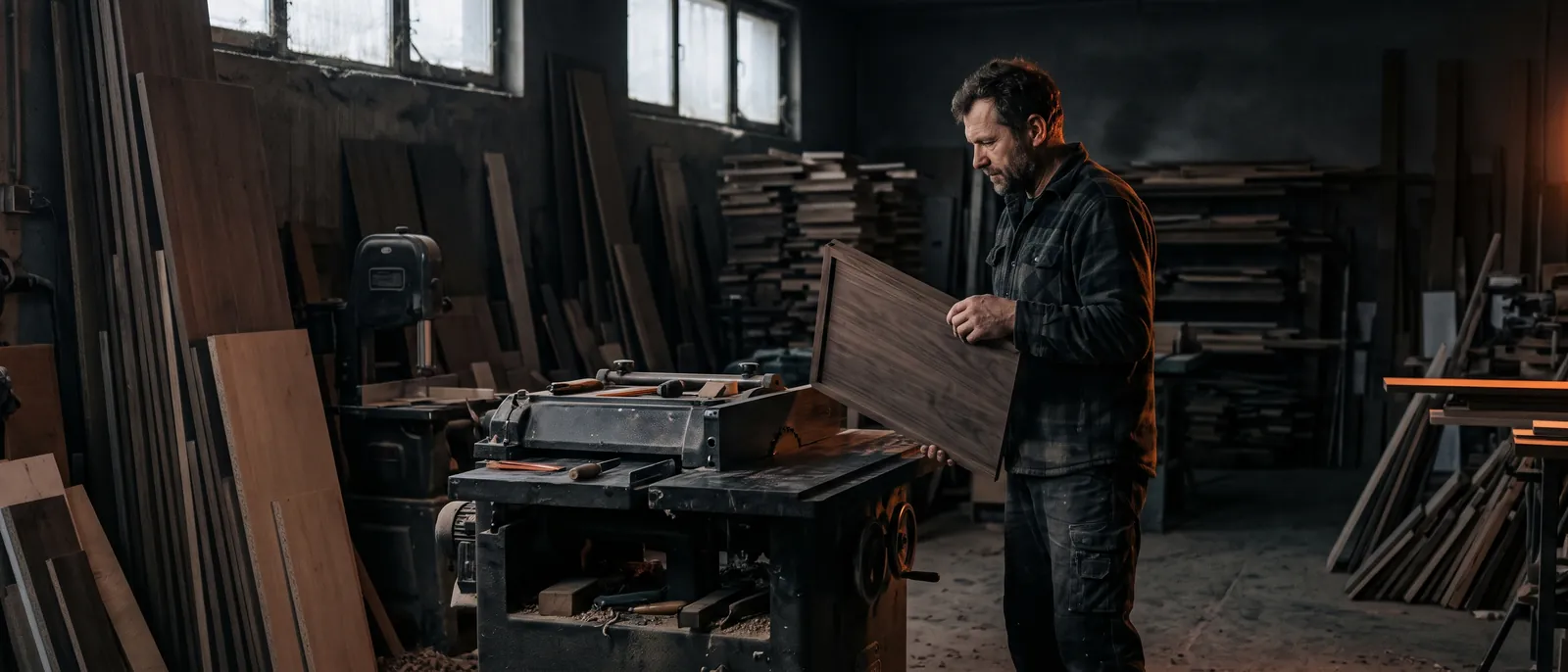
A custom cabinetry maker: website, ads, bots, CRM and SEO bring 200 keywords on page one of Google in Canada.
See the case study →Sales website, order CRM, ads and a bot for a small maker. The project has just launched; I'll share results once there are hard numbers.
See the case study →Processes, capacity, ideal part and customer, current sales channels.
Site, search visibility, directory profiles, tracking and quote flow.
Capability pages, RFQ form, CRM pipeline from request to PO.
Search ads, SEO and follow-up, measured in RFQs and won quotes.
Final prices in US dollars.
Capability pages, equipment list, RFQ with uploads.
Custom CMS for a large catalog of parts, products or specs.
Website, Google Ads setup and analytics through to RFQ.
Marketing for manufacturers looks nothing like consumer marketing. An engineer who needs 500 aluminum brackets machined to a tight tolerance, or a buyer looking for a second source for molded parts, searches Google with precise terms, checks industrial directories and asks colleagues. They visit a supplier's site to answer one question: can this shop make my part, at this volume, on time? If the site cannot answer, they move on.
That is why capability pages beat brochure copy. For each process: the machines you run, materials you work with, part size ranges, typical tolerances, finishing options, inspection equipment, volumes from prototype to production, and the industries you already serve. If you hold quality system registrations such as ISO 9001, state them accurately.
A manufacturer's website has one main goal: a request for quote with enough detail to price. The RFQ form accepts drawing files (STEP, PDF, DXF), quantity, material, finish and the deadline. It sends files to the estimator and creates a record in a CRM with a quote deadline and an owner. Open quotes get a reminder after a few days, so nobody forgets to follow up. That alone often wins jobs that used to go to the shop that called back first.
B2B searches have low volume and high value. Google Ads search campaigns on exact process and material phrases, with a tight geographic focus if freight matters, bring buyers ready to send drawings. SEO for capability pages compounds over time. Industrial sourcing directories like Thomasnet still matter in many categories, and your profile there should match your website. For LinkedIn ads aimed at engineering and procurement titles, I work with a trusted partner.
The FTC requires that an unqualified "Made in USA" claim mean all or virtually all of the product is made domestically, and its labeling rule allows penalties for violations. Many manufacturers can make a qualified claim instead. Environmental claims ("eco-friendly", "recyclable") fall under the FTC's Green Guides. I write only what you can back up; your attorney has the final word.
Industrial demand follows customer budgets more than weather. Many buyers set budgets in the fall and release projects in January. Trade shows bring bursts of contacts; a landing page and an email follow-up for each show turns badge scans into conversations. I plan around your show calendar and your capacity, and pause ads when the floor is full.
I work remotely with manufacturers across the US, from shops around Cleveland and Milwaukee to contract producers near Charlotte. We meet on Zoom in your morning. For heavy industry and industrial distribution, see also marketing for industrial companies.
In most shop websites I audit, the same three gaps appear. The equipment list is missing or years out of date, so engineers cannot judge fit. The RFQ form rejects large drawing files or sends them to an inbox nobody watches. And there is no record of where RFQs came from, so the owner cannot tell whether the website, a directory or a trade show brought the last big job. Closing those gaps costs little and often changes the volume of usable requests within a quarter.
Only if "all or virtually all" of the product is made in the US, under the FTC's standard, which a 2021 rule made enforceable for labels. Qualified claims like "assembled in USA from imported parts" are an option. I write what you can document; your attorney confirms.
Usually yes. Engineers screen suppliers by capability. Equipment lists, materials, part size ranges and typical tolerances help the right buyers self-select and save your estimators time. Keep customer names and drawings private unless you have permission.
For specific process and part terms, often well, because volume is low but intent is high. Generic terms bring students and job seekers. I use exact phrases, strong negatives and measure RFQs, not clicks.
If you work under ITAR or similar rules, some details cannot be published. I keep those pages general and route sensitive inquiries through a controlled form. Your compliance officer decides what goes online.
Tell me your processes and your ideal job. I'll reply within one business day.
What do you need most?