Middlemen
Margin goes downstream
Selling everything through packers or distributors keeps cash flowing but leaves the best margin with someone else.
Ads and visibility: customers who are looking for your service now or don’t know about it yet.
01 Google AdsInquiries from people searching for your service right nowfrom $1,000/mo 02 Social media adsMeta, TikTok, LinkedIn: customers who are not searching yetfrom $600/mo 03 SEOHigher in Google and Maps without paying per clickfrom $750/mo 04 Visibility in ChatGPT and AIYour business in AI assistant answerspart of SEO 05 Amazon and marketplacesSell where customers already buywith a partnerThe place where a visit turns into an inquiry, and a system that doesn’t lose that inquiry.
01 Web designA website that turns visits into inquirieslanding from $1,000 02 Online storesCart, payments and shipping, ready for adsfrom $3,900 03 CRMNo inquiry gets lost in a phonesetup $3,000 04 Chatbots and AIThey answer customers, at night too$1,900 05 Email and SMSCustomers come back instead of forgetting youquoted individuallyPlan and tracking first, budget second. You know what works before you spend more.
01 Strategy and auditKnow where to spend the budget before you spend it$1,900 02 AnalyticsSee which ad brings in money$550 03 ConsultationsA call about your specific problem$65/h 04 Free auditA quick review and 3–5 priorities to start$0How your business looks and sounds before anyone calls you.
01 Social media managementProfiles that look like a real businesswith a partner 02 Creative and videoGraphics and videos that stop the thumbquoted individually 03 BrandingA logo and style that sets you apartwith a partner Edmonton, Canada
200 keywords on page one of Google
Boreal Kitchens
 Winnipeg, Canada
up to 5 inquiries/mo from Google without ads
Adela Realtor
 Żywiec, Poland
from 3 to 9 locations in two years
Gładko Tnący Barber
 Żywiec, Poland
PLN 15 000 +/mo in delivery orders
Da Diego
Marketing for farms and agribusinesses that sells CSA shares straight to the people who eat, cook with or resell what you grow.
Free: a 30-minute call, an action plan and a price range in writing.
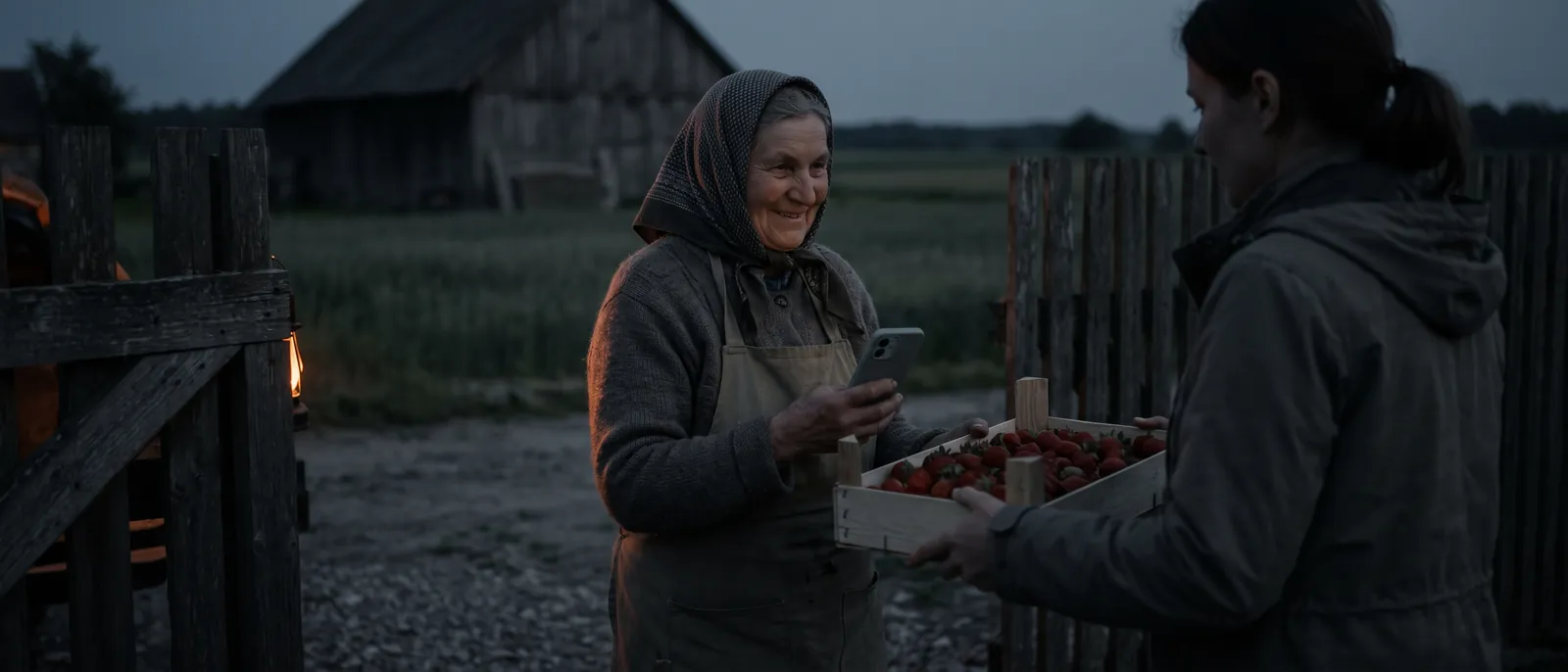
Selling everything through packers or distributors keeps cash flowing but leaves the best margin with someone else.
Strawberries are ready this weekend. A Facebook post on Friday night reaches a fraction of the people who would come.
People ask "do you ship?" or "can I reserve a half hog?" in comments, and the answer is a phone number.
Before calling, customers read reviews. I help you collect them and reply in a way that builds trust.
Shares, boxes, meat bundles or holiday turkeys reserved and paid online, with pickup days or local delivery zones.
Farm stand, u-pick or winery listed with seasonal hours, directions that work on rural roads and fresh photos.
"Peaches are in" sent to people who asked for it. Consent first, STOP honored, timed to harvest.
Pumpkin patch, corn maze, farm dinners and tours with timed tickets, so busy weekends don't overflow.
Restaurants, grocers, breweries or equipment buyers get their own page with an inquiry form.
Website with online ordering, CRM and ads: about $4,000 a month in orders through its own site instead of third-party apps. The same direct model a farm uses for boxes and pre-orders.
See the case study →Sales website, order CRM, ads and a bot for a small producer. The project has just launched; I'll share results once there are hard numbers.
See the case study →What you sell, to whom, when it is ready and how people buy now.
Products to sell direct, a season calendar and the channels to use.
Store or pre-order site, Maps listing, alert sign-ups, booking.
Alerts and ads timed to harvest and events, reviewed every two weeks.
Final prices. Payment processing and ad spend are paid to those providers.
Pre-orders, shares, bundles, pickup days and delivery zones.
One page for CSA sign-ups, a pumpkin patch or a farm event.
Local campaigns for harvest and events after a $600 setup.
Marketing for farms used to mean a sign by the road and a booth at the Saturday market. Those still work, but more and more buyers find farms on Google Maps, Instagram and local Facebook groups, and they want to order ahead. A family that can reserve a box of tomatoes, a CSA share or a quarter beef online becomes a repeat customer. A family that has to call and leave a voicemail often does not.
The point is not to replace wholesale. Most farms will keep selling through packers, co-ops or distributors. Direct sales add a higher-margin channel for part of the harvest and build a customer list that belongs to you.
For most farms, the first step is a simple online store or pre-order site: what you sell, when it is ready, how much it costs, pickup days and places, and local delivery if you offer it. Inventory follows the harvest, so the product list changes weekly. I build it on a custom CMS with an edit panel simple enough to update from a phone in the barn.
The second step is your Google Business Profile: correct pin (rural addresses are often wrong on maps), seasonal hours, photos, products and events. People searching "u-pick strawberries near me" or "Christmas tree farm" decide from that listing.
Pumpkin patches, corn mazes, apple picking, farm dinners, sunflower fields and winery tastings can bring more revenue than the crop itself. They also create crowd problems. Timed online tickets spread visitors across the day, give you numbers in advance and let you pause sales when a field is picked over. Weather changes plans, so a clear rain policy and fast updates on the website and Maps listing matter. See event websites for how booking pages work.
Food sales are regulated. Cottage food laws, meat and poultry inspection, raw milk rules and labeling requirements differ by state and product. Claims like "organic" are regulated under the USDA organic program; "natural" and "grass-fed" claims should match what you can document. Texts need written consent; emails need a postal address and an unsubscribe link. If you accept SNAP/EBT at a farm stand or market, say so clearly. I describe what you can document and leave legal questions to your extension office or attorney.
Everything follows the season: CSA sign-ups in late winter, spring plant sales, summer berries and sweet corn, fall apples and pumpkins, Thanksgiving turkeys and Christmas trees. In the South, the season starts earlier and summer heat shapes event hours; in the North, winter means planning and pre-selling next year's shares. I build a season calendar with you, schedule text and SMS alerts and ads for each moment, and switch everything off when there is nothing to sell.
I work remotely with farms and agribusinesses across the US, from orchards around Fresno to ranches near Boise and Omaha. Calls happen on Zoom in your morning, which on a farm may already be the middle of the day.
It depends on how it is processed and on your state. Meat sold by the cut usually needs USDA or state inspection; selling animals by the share follows different rules. Raw milk rules vary widely. I build the store around what your license allows; your extension office or attorney confirms the details.
If you sell direct, yes. Even a single page with what you sell, when, where to find you and a pre-order or sign-up form changes how many people show up. Social media alone reaches only part of your followers.
Yes, if they signed up for texts with clear consent, and you honor STOP replies. Business texting needs carrier registration. A sign-up sheet at the stand with a consent line and a web form cover most of it.
Yes: equipment dealers, seed and feed suppliers, ag services. Those look more like industrial marketing, with product pages, quote forms and a CRM for dealers and growers.
Tell me what you grow or raise, and where. I'll reply within one business day.
What do you need most?