01
Customers don't recognize you
Your ad, your website and your truck look like three different businesses. Each touch starts trust from scratch.
Ads and visibility: customers who are looking for your service now or don’t know about it yet.
01 Google AdsInquiries from people searching for your service right nowfrom $1,000/mo 02 Social media adsMeta, TikTok, LinkedIn: customers who are not searching yetfrom $600/mo 03 SEOHigher in Google and Maps without paying per clickfrom $750/mo 04 Visibility in ChatGPT and AIYour business in AI assistant answerspart of SEO 05 Amazon and marketplacesSell where customers already buywith a partnerThe place where a visit turns into an inquiry, and a system that doesn’t lose that inquiry.
01 Web designA website that turns visits into inquirieslanding from $1,000 02 Online storesCart, payments and shipping, ready for adsfrom $3,900 03 CRMNo inquiry gets lost in a phonesetup $3,000 04 Chatbots and AIThey answer customers, at night too$1,900 05 Email and SMSCustomers come back instead of forgetting youquoted individuallyPlan and tracking first, budget second. You know what works before you spend more.
01 Strategy and auditKnow where to spend the budget before you spend it$1,900 02 AnalyticsSee which ad brings in money$550 03 ConsultationsA call about your specific problem$65/h 04 Free auditA quick review and 3–5 priorities to start$0How your business looks and sounds before anyone calls you.
01 Social media managementProfiles that look like a real businesswith a partner 02 Creative and videoGraphics and videos that stop the thumbquoted individually 03 BrandingA logo and style that sets you apartwith a partner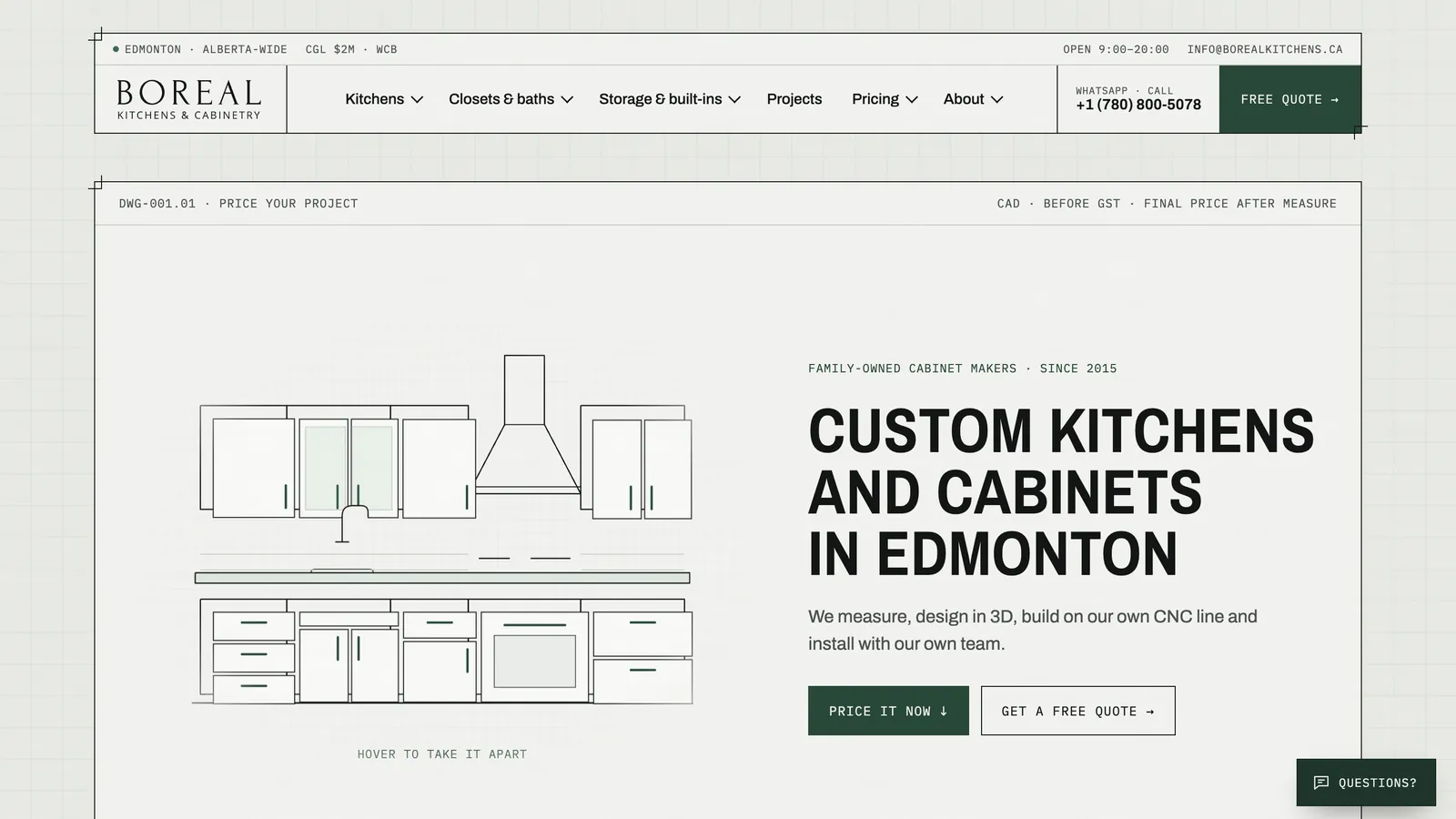 Edmonton, Canada
200 keywords on page one of Google
Boreal Kitchens
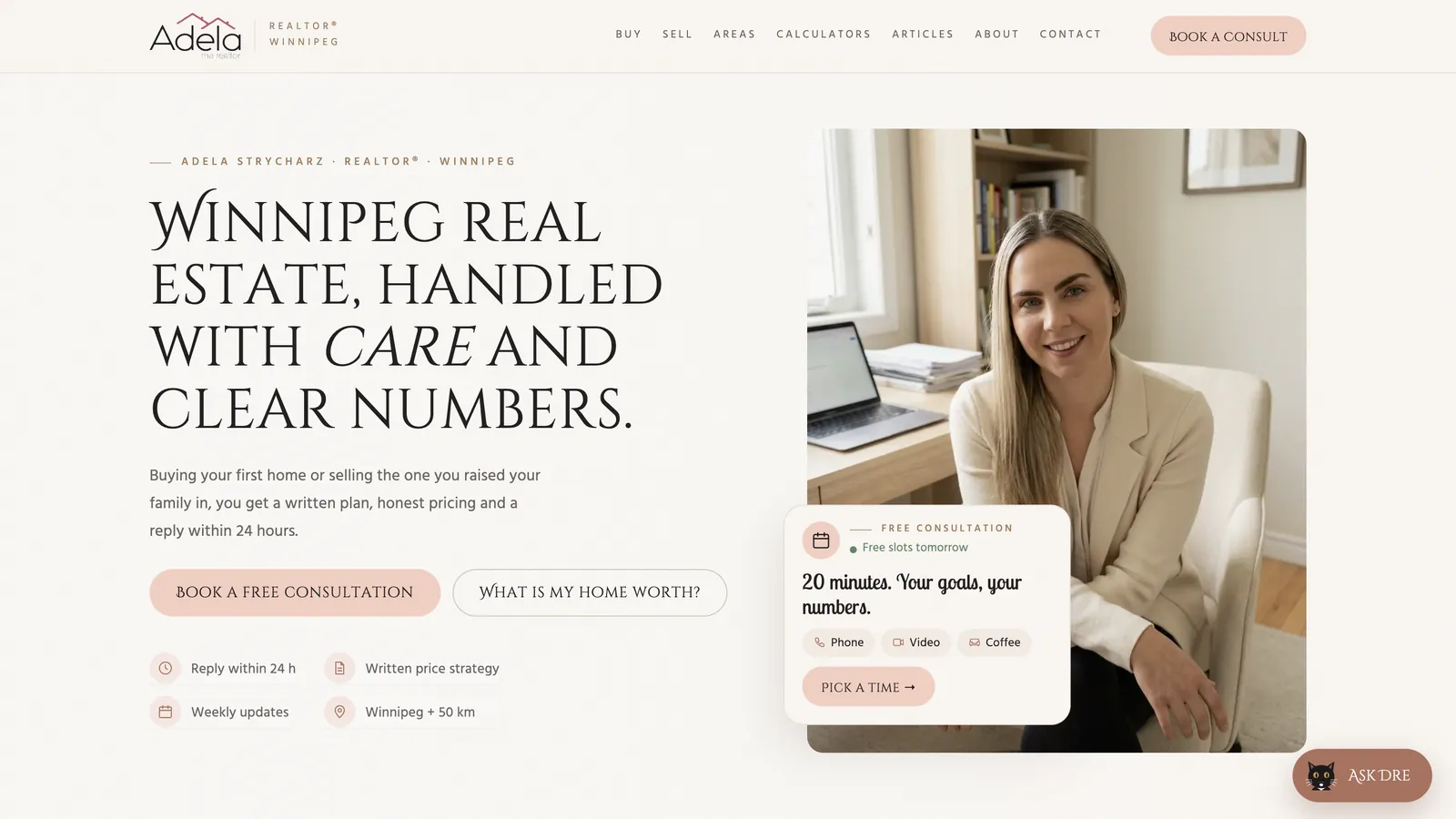 Winnipeg, Canada
up to 5 inquiries/mo from Google without ads
Adela Realtor
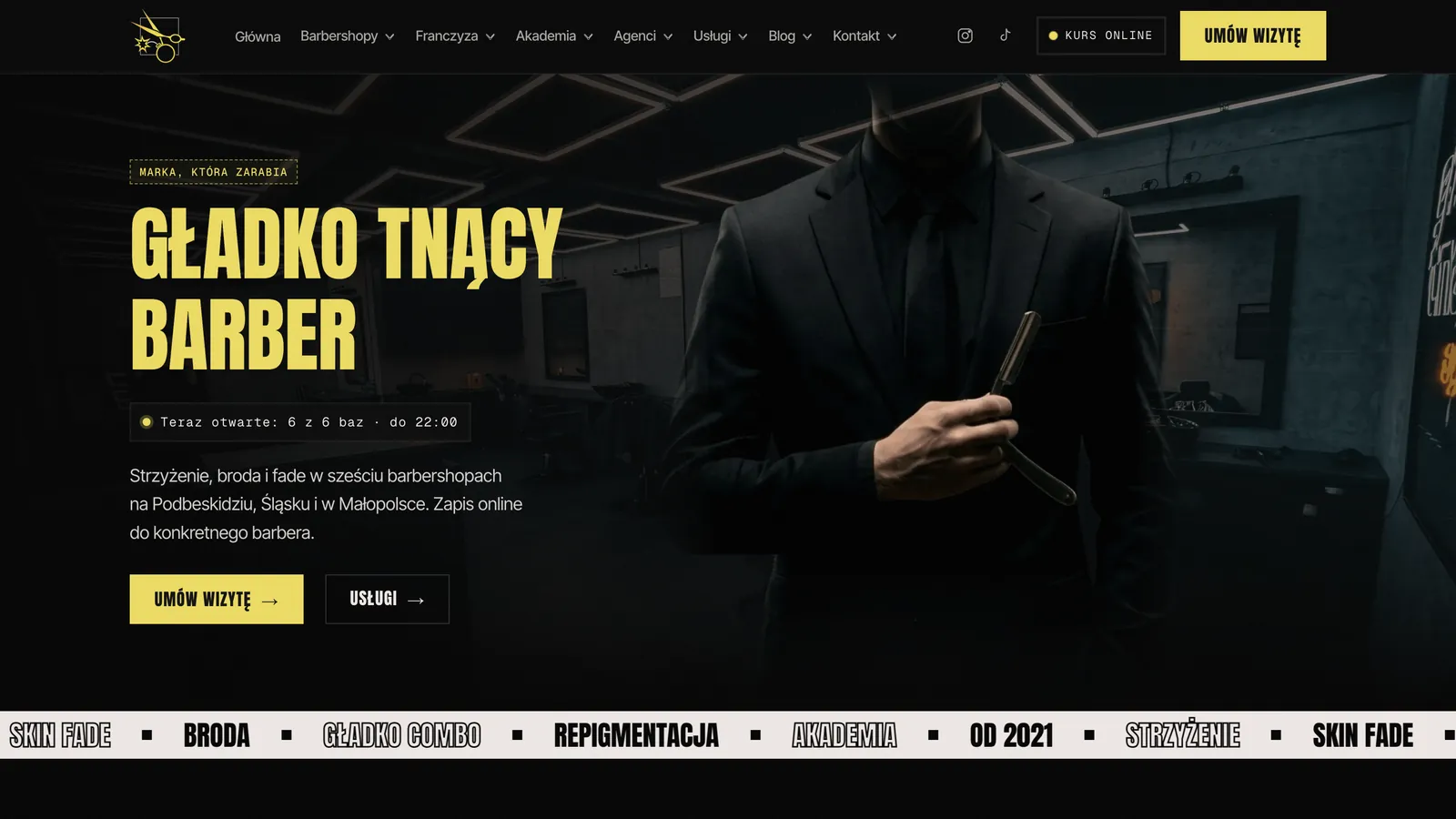 Żywiec, Poland
from 3 to 9 locations in two years
Gładko Tnący Barber
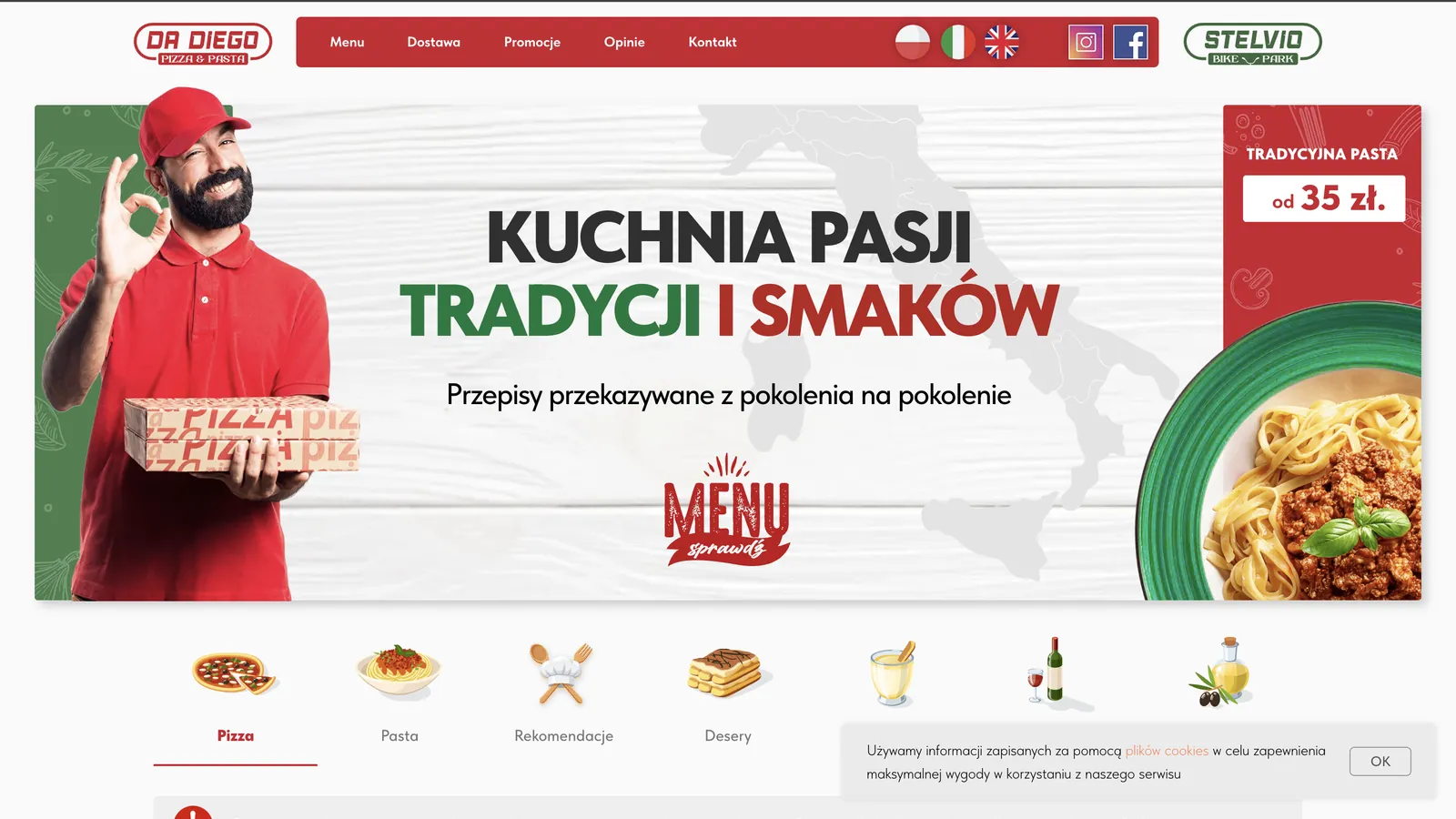 Żywiec, Poland
PLN 15 000 +/mo in delivery orders
Da Diego
A visual identity turns a logo into a system: colors, fonts, photo style and ready-made templates that make every ad, web page, invoice and Instagram post look like it came from the same company. Your team stops starting from zero, and customers start recognizing you before they read the name.
Free: a 30-minute call, an action plan and a price range in writing.
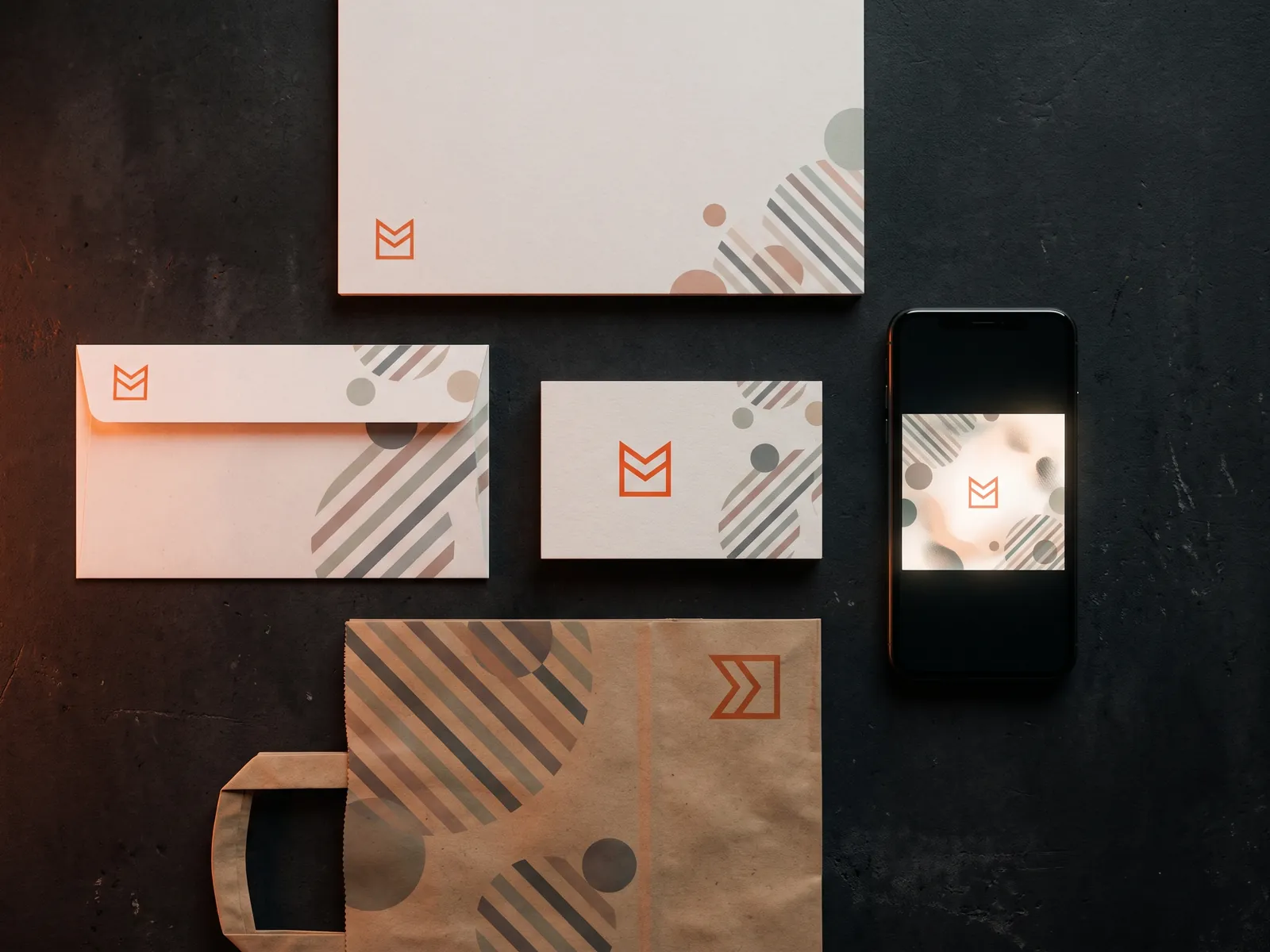
Your ad, your website and your truck look like three different businesses. Each touch starts trust from scratch.
A flyer, a post, a price list: each one means picking colors and fonts again, and arguing about it.
A printer, a web designer and a sign shop each reinterpret your brand, and you pay for every correction.
A patchwork look makes an established firm seem like a side hustle, and prices get judged accordingly.
Logo, colors and typeface come together into a system that works on your website, in ads and on your sign.
Everything you currently use gathered in one place: website, ads, signs, forms, uniforms, packaging.
Two directions for color, type and imagery, shown on your real materials.
The chosen direction built out: palette with contrast checks, type scale, graphic elements, photo rules.
Ready templates for the things you make most often: social posts, ads, documents, price lists.
Files, fonts list, a short usage guide and a Zoom walkthrough for your team.
In US dollars. A visual identity is delivered with a trusted design partner and quoted individually by scope and number of templates.
Colors, fonts, imagery, graphic elements and templates.
Your site rebuilt in the new identity, hand-coded or on a custom CMS.
See website redesign→A visual identity is the set of rules that makes your business look like itself everywhere. Mood boards and inspiration are useful at the start, but what you need at the end is concrete: these three colors in these proportions, these two fonts at these sizes, photos taken in this style, and templates where all of it is already set up. When a new flyer, ad or web page is needed, nobody has to decide anything from scratch.
Colors are chosen for recognition, but also for readability. Text on your website and in ads must contrast enough with its background to be read by people with low vision, in bright sunlight and on cheap phone screens. The common reference in the US is WCAG 2.1 AA, which sets a minimum contrast ratio of 4.5:1 for normal-size text. Website accessibility is also widely raised in ADA lawsuits and demand letters, so starting with a compliant palette is far cheaper than fixing a live site later. Every color pair in your system is checked, and the guide says which combinations are safe for text. More on the website side is on the website accessibility page.
The identity is designed around the things you actually produce. For a restaurant that means menus, delivery app tiles, packaging, window decals and Instagram. For a contractor it means truck graphics, yard signs, estimates and Google Business Profile photos. For a clinic it means intake forms, appointment cards, website pages and reminder emails.
That is why the first step is an inventory of everything you use today. The new system is shown on those items, not on generic mockups, so you can judge it in context.
The biggest return from a visual identity comes from templates. A good social post template lets anyone on your team make a decent post in five minutes. An ad layout with fixed positions for headline, photo and logo makes ad graphics faster to produce and test. A branded proposal and invoice make small firms look established. Email headers and blocks keep newsletters consistent; see email templates for that side.
Templates are built in the tools you already use, with locked elements where needed, so the brand does not drift after six months of busy weeks.
Because I build websites and run ads myself, the identity is planned for screens from the start: button colors that stand out, fonts that load fast and read well on mobile, photo styles that work in ad placements. When it is done, the next step is usually applying it to your website, either through a website redesign or a new build. If several people or locations will use the brand, written brand guidelines keep it consistent over time.
Visual identity design is delivered with a trusted design partner. I run the inventory and brief, lead the direction, check the system against your website and campaigns and stay your contact. You get every file, the font list, templates, a short usage guide and a recorded Zoom walkthrough for your team.
The logo is one element: the mark that names you. The visual identity is the whole system around it: colors, fonts, photo style, graphic shapes, layouts and templates. A logo alone cannot make a flyer, an ad and a web page look related. The system can.
Usually, yes. Many businesses have a decent logo and a chaotic everything-else. In that case the identity is built around the existing logo, sometimes with a light cleanup of its files. If the logo itself is the problem, I will say so before you spend money on the rest.
The ones you need most often. Typical picks are social media posts and Stories, ad layouts, a letterhead and invoice, a price list or menu, a proposal cover and an email header. Templates are built in tools your team already uses, such as Canva, Google Workspace or Microsoft Office, so nobody needs design software.
Not necessarily. Many excellent fonts, including a large part of Google Fonts, are free for commercial use. If a paid font is clearly better for your brand, I tell you the license cost up front and you decide. Either way you get a list of every font and where its license comes from.
A trusted design partner creates the identity under my direction. I lead the brief, check every element against how it will work on your website and in ads, and stay your only contact. One written agreement covers deadlines and deliverables.
Send a few photos of your current materials: website, flyers, signs, posts. I reply within one business day.