



Ad graphics
Ad graphics that say what you sell, to whom and why now, in the second it takes to scroll past. I design several angles, cut them for every placement and then let the campaign results decide which ones stay.
Free: a 30-minute call, an action plan and a price range in writing.
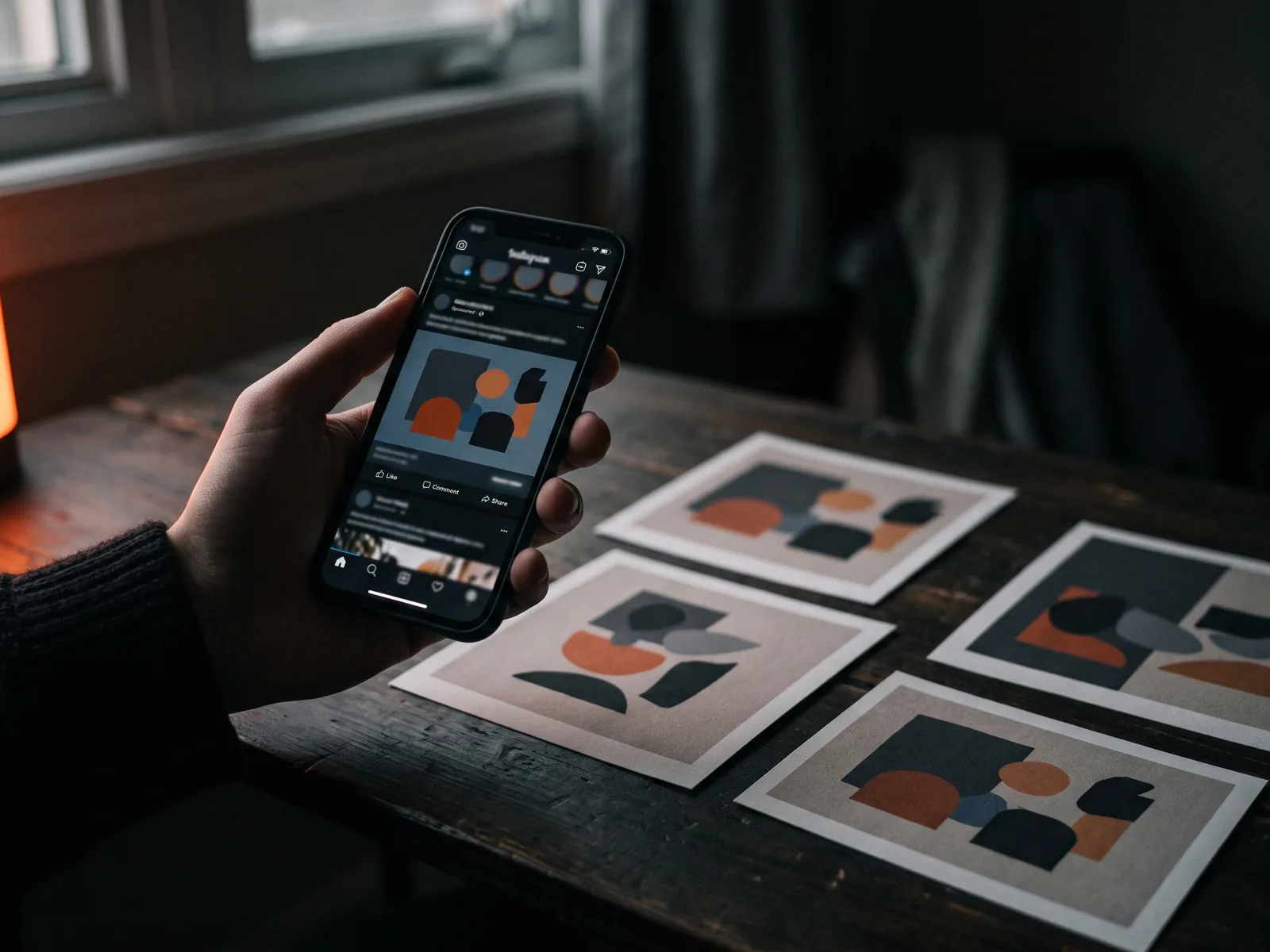
A typical set
of ad graphics
Three or four different reasons to buy, each with its own image and headline. Not one design in four colors.
Square and 4:5 for feeds, 9:16 for Stories and Reels, landscape and banner sizes for Google Display and Demand Gen.
Step-by-step, product range, before-and-after, or a price list that people actually swipe through.
Copy that fits platform policies on health, finance, housing and personal attributes, so ads clear review.
Your colors, fonts and logo used the same way each time, so people start recognizing you.
Editable files so you or anyone you hire can update prices and dates later.
Ad graphics
in four steps
Short brief
Offer, audience, the reasons people buy, any photos of your real work, and examples you like or hate.
First drafts
One design per angle in the main format, sent for your comments within days.
Revisions and sizes
Up to three rounds of changes, then every approved design resized for each placement.
Launch and learn
If I run the ads, the versions go live side by side and the next set builds on the winners.
Ad graphics
pricing
In US dollars. A set of ad graphics is quoted individually, based on the number of angles and formats.
Several angles, every size, source files.
- 3 rounds of revisions
- Feed, Stories and Display sizes
- Editable files handed over
Campaign, pixel and tracking set up by me, ready for the new graphics.
See Meta ads→An hour going through your current ads, with a list of what to change.
Book a consultation→What makes ad graphics
work on a small screen
Ad graphics get about one second
People scroll fast on their phones. Ad graphics have roughly a second to stop the thumb and a couple more to make the point. In that time the viewer needs to understand three things: what this is, whether it is for them, and what to do next. Anything beyond that is a bonus.
That is why I design for the phone first. Every draft is checked at actual size on a screen held at arm's length, not on a 27-inch monitor.
Five rules I follow
- One message per image. A single headline, a single offer.
- Real over stock. Your team, your work, your product in use.
- Big, short text. If it cannot be read on a phone, it does not belong in the image.
- Contrast that survives the feed. Feeds are busy; the ad must stand out in light and dark mode.
- Logo small and consistent. Recognition comes from repetition, not size.
Angles beat layouts
The most common mistake is making four versions of one idea in different colors. That tests nothing. A real set tests different reasons to buy. For a cleaning company, that might be "booked in 60 seconds", "same cleaner every visit", "price shown up front" and a before-and-after. For a med spa, "first visit price", "licensed injector", "results at two weeks" (if true and allowed) and a quick explainer.
Each angle gets its own image and headline. After a week or two of spend, the campaign shows which one your customers care about. The next set builds on the winner, and the loser is retired without debate.
Sizes and placements
Meta feeds prefer square or 4:5 portrait images. Stories and Reels need 9:16 vertical with space left at the top and bottom for the interface. Google Display, Demand Gen and Performance Max ask for landscape, square and portrait images plus logos. One design stretched into all of these looks broken somewhere. Every approved design is rebuilt for each placement, not just resized.
Ad graphics and platform rules
Ads get rejected more often than owners expect. Meta restricts content that implies personal attributes ("Are you struggling with debt?"), before-and-after images for weight loss, and certain health claims. Housing, employment, credit and financial products fall under Special Ad Categories with targeting limits. Google has strict policies on healthcare and medicines. I design within these rules from the first draft, which saves days of back-and-forth with review.
FTC rules apply as well: prices in an ad should reflect what customers actually pay, and claims like "best" or "#1" need support. Keeping graphics honest is both safer and, in my experience, better for results.
When graphics are not the problem
Sometimes new ad graphics will not help. If people click but do not convert, the issue is often the landing page, the offer or the follow-up. If nobody clicks at all, the targeting or budget may be off. In an ad account audit I check all of it, and I will tell you honestly if creative is not where your money is leaking. The article on Facebook ads with no results covers the most common causes.
What to send me
A short description of the offer and who buys it, any photos of your work or products, your logo and colors if you have them, and a link to your current ads. If you want motion too, the same angles can become video ads or Reels and Shorts. For the full creative picture, see ad creative.
Delivery
You get approved graphics in every size, editable sources, and a short note explaining what each angle is meant to test. Up to three rounds of revisions are included. If I manage your campaigns, the graphics go live directly and you see the results in your regular report every two weeks.
Related services
Ad graphics FAQ
How much text can an ad image have?
Meta dropped its strict text limit years ago, but images with less text still tend to perform better and look less like ads. I aim for one short headline on the image, with details in the ad text. Google Display has its own rules, and some sizes work best with almost no text at all.
Do I need professional photos?
Not usually. Clear phone photos of your actual work, products and team often beat stock images, because people can tell the difference. If you have nothing usable, I will send you a short list of photos to take this week.
How many graphics do I need per month?
For a small local budget, a new set of three or four angles every month or two is usually enough. Larger budgets and broad audiences burn through creative faster. I watch the numbers and suggest a refresh before results drop.
Can I edit the graphics myself later?
Yes. You get editable source files, and I can set up simple templates for things you change often, like dates, prices or seasonal offers, so you do not need a designer for every update.
Do you make ads for Google Search too?
Search ads are text only: headlines and descriptions. I write those as part of Google Ads setup and management. Graphics are for Display, Demand Gen, Performance Max and social placements.
Get a fresh set
of ad graphics
Send me your offer and a few current ads. I reply within one business day with angles worth testing.