Phone ringing mid-job
You cannot pick up on a ladder or with a client in the chair. The caller tries the next business on the list.
Busy handsAds and visibility: customers who are looking for your service now or don’t know about it yet.
01 Google AdsInquiries from people searching for your service right nowfrom $1,000/mo 02 Social media adsMeta, TikTok, LinkedIn: customers who are not searching yetfrom $600/mo 03 SEOHigher in Google and Maps without paying per clickfrom $750/mo 04 Visibility in ChatGPT and AIYour business in AI assistant answerspart of SEO 05 Amazon and marketplacesSell where customers already buywith a partnerThe place where a visit turns into an inquiry, and a system that doesn’t lose that inquiry.
01 Web designA website that turns visits into inquirieslanding from $1,000 02 Online storesCart, payments and shipping, ready for adsfrom $3,900 03 CRMNo inquiry gets lost in a phonesetup $3,000 04 Chatbots and AIThey answer customers, at night too$1,900 05 Email and SMSCustomers come back instead of forgetting youquoted individuallyPlan and tracking first, budget second. You know what works before you spend more.
01 Strategy and auditKnow where to spend the budget before you spend it$1,900 02 AnalyticsSee which ad brings in money$550 03 ConsultationsA call about your specific problem$65/h 04 Free auditA quick review and 3–5 priorities to start$0How your business looks and sounds before anyone calls you.
01 Social media managementProfiles that look like a real businesswith a partner 02 Creative and videoGraphics and videos that stop the thumbquoted individually 03 BrandingA logo and style that sets you apartwith a partner Edmonton, Canada
200 keywords on page one of Google
Boreal Kitchens
 Winnipeg, Canada
up to 5 inquiries/mo from Google without ads
Adela Realtor
 Żywiec, Poland
from 3 to 9 locations in two years
Gładko Tnący Barber
 Żywiec, Poland
PLN 15 000 +/mo in delivery orders
Da Diego
An AI phone answering voicebot for owners whose hands are busy when the phone rings: plumbers under a sink, stylists mid-cut, dentists with a patient in the chair. It picks up, answers the routine questions, books or takes a detailed message and sends you a summary, so a missed call stops meaning a lost customer.
Free: a 30-minute call, an action plan and a price range in writing.
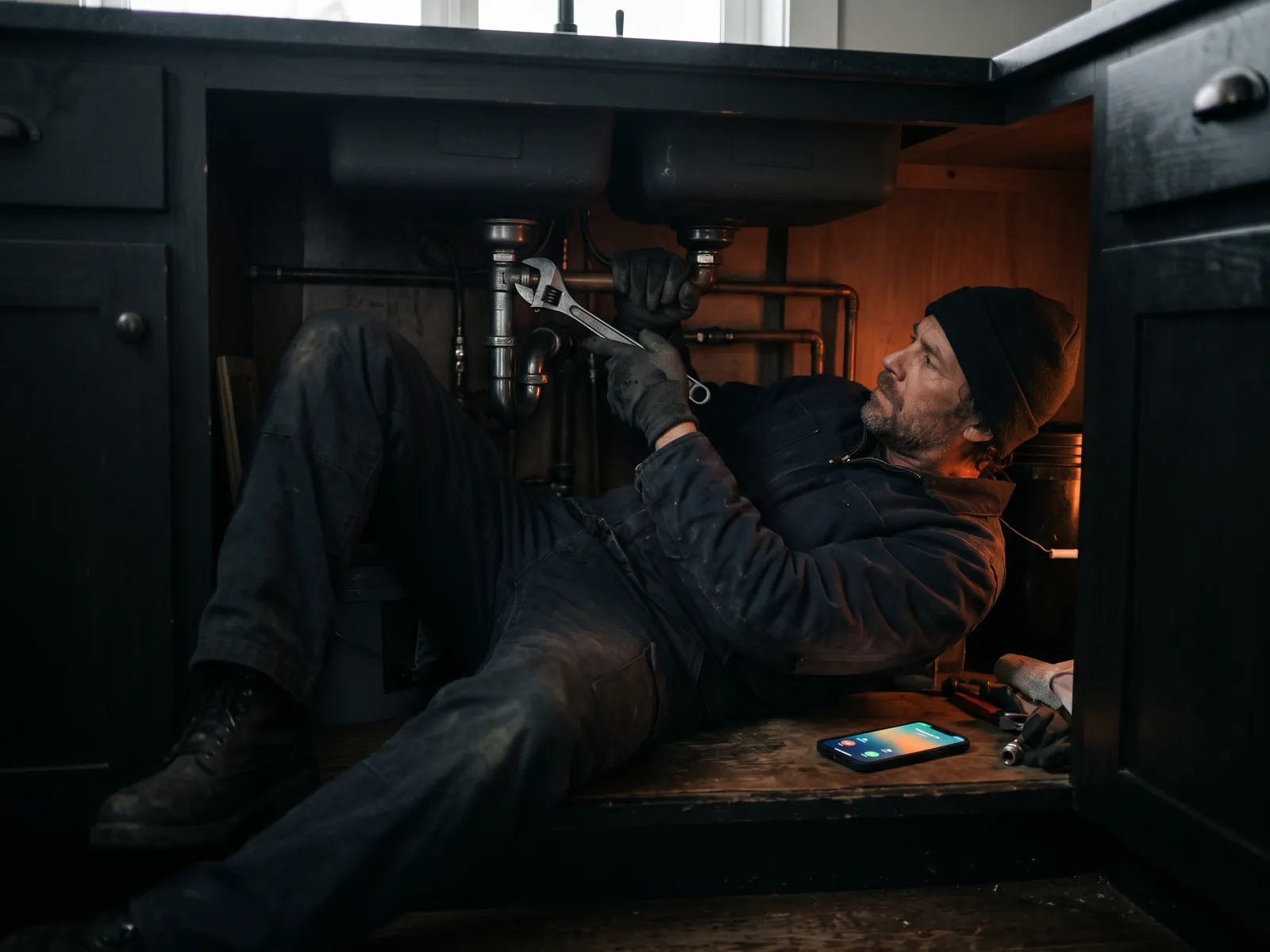
You cannot pick up on a ladder or with a client in the chair. The caller tries the next business on the list.
Busy handsThe first hot day of summer, the first freeze of winter, Monday morning. One person cannot answer three lines.
Peaks"Call me back" and a number. No address, no problem description, no idea if it is urgent.
VoicemailI deliver voicebots with a trusted partner; the contract, deadlines and communication stay with me.
Voicebots are quoted individually after a short call, because call volume and connections vary a lot. Prices are in US dollars. Telephony and AI usage are billed to your account per minute.
AI phone answering for inbound calls.
If most customers would rather type, a chat or messaging bot is simpler and cheaper.
An AI phone answering voicebot fits businesses where customers still prefer to call and the owner or staff often cannot pick up. Home services are the classic example: plumbers, electricians, HVAC, roofers, locksmiths, garage door repair. When a pipe bursts or the AC dies in July, people call, and they call the next number if nobody answers. Salons, clinics, auto shops and restaurants taking catering orders have the same problem during their busiest hours.
If most of your customers already prefer to text or chat, a booking bot or website chatbot is simpler and cheaper. A voicebot is for the businesses where the phone is still king.
The phone rings twice. The voicebot answers: "Thanks for calling Smith Plumbing, this is the automated assistant. How can I help?" The caller explains that the water heater is leaking. The bot asks for the address and zip code, whether water is spreading, and the best callback number. It confirms the details back, books the next available slot or, if the leak is serious, transfers the call to the on-call technician right away. Within seconds, you get a text with a summary and the recording link, and a new deal appears in your CRM.
Routine questions, such as hours, service area, rough pricing or whether you work on a certain brand, are answered directly from the information you approved.
Voicebots usually record and transcribe calls, which is useful for quality and for your summaries. Recording rules differ by state: many require only one party's consent, but several, including California and Florida, require everyone on the call to agree. The simplest approach is a short notice in the greeting that the call may be recorded. Healthcare practices should not let a voicebot collect detailed health information without a HIPAA review. Your privacy policy should mention the voicebot and its providers. For your specific case, check with your attorney.
Voicebots are quoted individually after a short call, because the setup depends on call volume, the number of call types and which systems need to be connected. On top of the setup, telephony and AI usage are billed per minute directly to your account. For most small businesses, that running cost is modest compared with the value of one job that would otherwise have gone to a competitor. My article on AI receptionists and voice bots goes deeper into the economics.
Before launch, I look at how many calls you currently miss, using your phone provider's logs or call tracking. After launch, the voicebot reports every call: what it was about, how it ended (answered, booked, transferred, message) and how long it took. After a month, you can see how many bookings and leads came from calls that would previously have hit voicemail. If you run ads, call tracking also shows which campaigns make the phone ring.
I deliver voicebots with a trusted partner. I handle the call analysis, script, connections and testing, and I stay your single point of contact. The agreement and deadlines are with me, and the phone number and accounts remain yours. If you are not ready for a voicebot, a simpler first step is an automatic text to anyone whose call you miss, described in my article on missed-call text back.
They should, and the voicebot says so in the greeting: it is the business's automated assistant and a person is available if needed. Modern voices sound natural, but pretending to be human damages trust when people realize, and disclosure rules for AI interactions are spreading. Most callers care more about getting their question answered than about who answers.
It can recognize them and act fast. Words like flooding, gas smell, no heat or chest pain trigger an immediate transfer to your on-call number or, where life may be at risk, a clear instruction to hang up and call 911. A voicebot never decides on its own that an emergency can wait.
Yes. Usually your existing number forwards calls to the voicebot when you do not pick up, after hours, or always, depending on your choice. Customers dial the same number printed on your trucks and Google Business Profile. Nothing changes on their side.
I do not set up outbound cold calling. The FCC has made clear that AI-generated voices count as artificial voices under the TCPA, so calls like that generally need the recipient's prior consent, and the legal risk is high. Inbound answering and agreed callbacks to people who asked for them are a different matter.
Current speech recognition handles a wide range of accents and background noise well, though not perfectly. During testing I make calls with different speakers and noisy settings and set the bot to confirm key details such as the address and phone number by repeating them back. If it is unsure, it asks again or offers a callback from a person.
Tell me roughly how many calls you get a week and how many you miss. I'll reply within one business day with an honest view on whether a voicebot makes sense.