



Ad creative that works on a small budget
How to make ad creative that works on a small budget: angles to test, formats you can produce on a phone, hooks, copy that earns clicks and how to test.
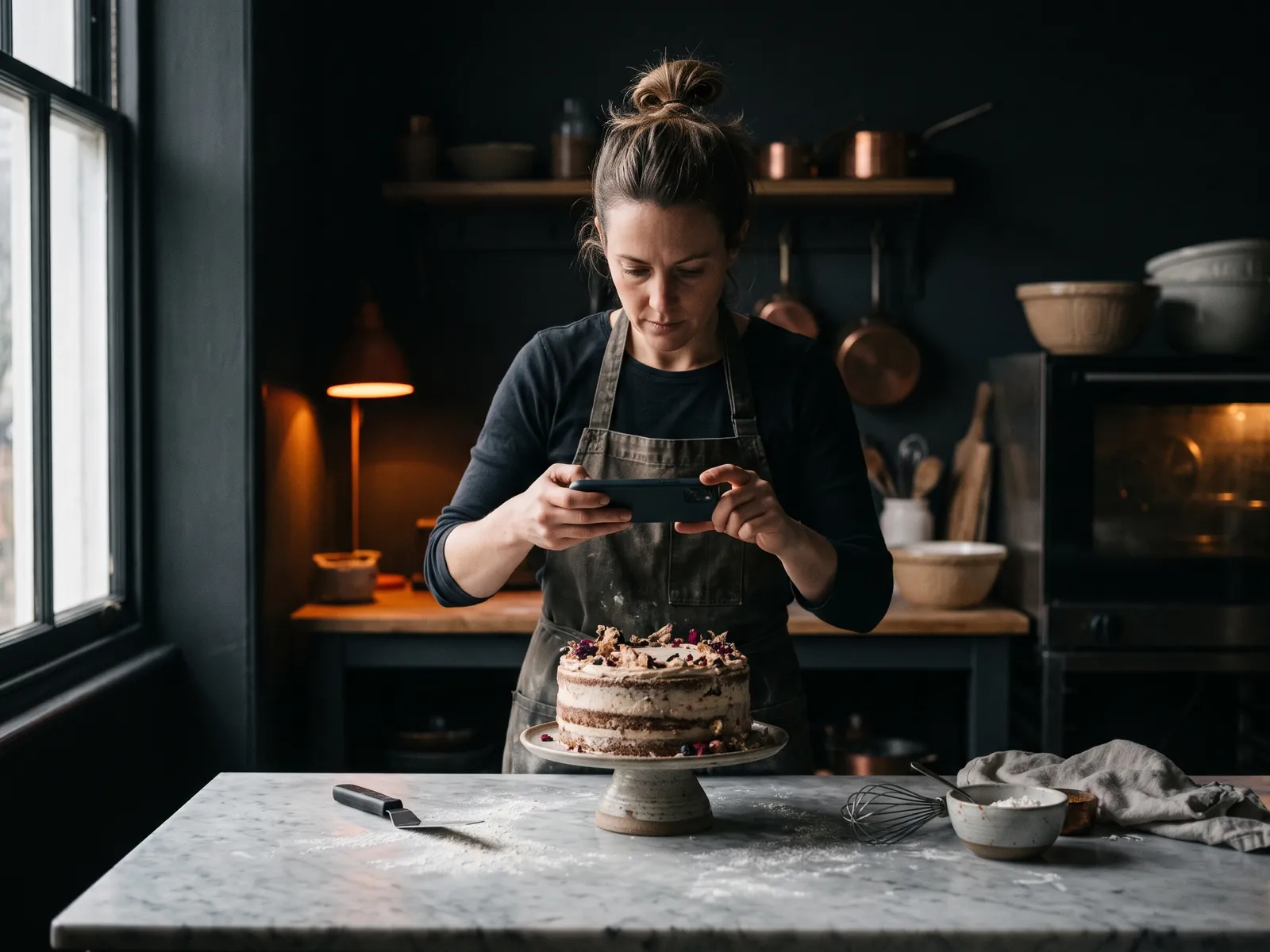
Ad creative that works on a small budget is usually simple: a real photo or a short phone video of your actual work, one clear message, a specific offer and a next step. Small businesses rarely lose because their ads look too plain. They lose because the ad is vague, looks like stock, or tries to say five things at once. A clear message filmed on a phone tends to beat a polished but generic commercial, especially on Facebook, Instagram and TikTok.
Here's how I approach creative for clients with modest budgets: where ideas come from, how to produce a month of ads in an afternoon, how to write copy that earns a click, and how to test without wasting money.
Start with angles, not designs
An angle is the reason someone should care. Before opening any design tool, write down five or six angles for your business. Most come from these sources:
- The problem: "Water heater making noises at night?"
- The result: a finished kitchen, a clean carpet, a confident smile
- The process: how the job is done, step by step, which builds trust
- The person: you or your team, explaining who you help
- The proof: a real review, a number of years, before-and-after photos
- The objection: "Worried about the mess? Here's how a job day goes."
Each angle becomes a few ads. Testing angles teaches you far more than testing button colors.
Formats that cost almost nothing
You don't need a studio. A recent smartphone, daylight and a quiet room cover most needs.
| Format | How to produce it | Works well on |
|---|---|---|
| Short vertical video (10 to 30 seconds) | Film on a phone, add captions in a free editing app | Reels, Stories, TikTok, YouTube Shorts |
| Talking head | You, facing the camera, explaining one thing | Facebook, Instagram, LinkedIn |
| Before-and-after | Two photos from the same angle, side by side | Feed ads, carousels |
| Carousel | 3 to 6 images telling a short story or showing options | Facebook, Instagram, LinkedIn |
| Review card | A real review in large text over a photo of the work | Retargeting |
| Simple static image | One strong photo, short headline | Feeds, Google Display |
Batch production saves the most time. Block out one afternoon: film five or six short clips, take 20 photos of real work, record two talking-head takes. That's enough raw material for a month of ads.
Hooks: the first second decides
On social platforms, people decide in about a second whether to stop scrolling. The opening frame should do one of three things: show motion (hands working, something changing), show the result first, or put a short, specific line on screen ("Gutter cleaning in Naperville, booked this week").
Avoid starting with your logo. Nobody stops for a logo.
Writing copy that earns the click
Short is usually better, but specific always is. A simple structure for social ads:
- First line: who it's for or the problem. "Leaky faucet driving you crazy?"
- Second line: what you do and why you. "Licensed plumber, same-day visits in north Phoenix." (Only claim what's true.)
- Third line: the next step. "Tap to book a time."
For search ads, mirror the searcher's words and add one concrete benefit; the beginner's guide to Google Ads covers responsive search ads.
Words that weaken ads: quality, professional, best-in-class, solutions, trusted partner. Words that strengthen them: a time, a place, a price range, a number of years, a name.
Proof without breaking the rules
Real reviews and before-and-after photos are powerful, and the rules around them are getting stricter.
- Reviews: use only real ones, quoted accurately, with permission. The FTC's rule on fake reviews prohibits fabricated or misleading reviews and testimonials; see my article on the FTC fake reviews rule.
- Endorsements: if a creator or customer got paid or received something free, that must be disclosed.
- Personal attributes on Meta: ads may not imply that you know personal details about the viewer, such as health conditions or finances ("Are you struggling with debt?" phrased directly at the person is a common rejection).
- Health and beauty: before-and-after images for weight loss and some cosmetic treatments are restricted on several platforms. Check the policy for your category.
Sizes and specs without the headache
You don't need every size. Shoot vertical video (9:16) and square or 4:5 images, and most placements on Meta, TikTok and YouTube Shorts are covered. For Google Display and Performance Max, add a landscape image and your logo. Keep text and faces in the middle of the frame so nothing important gets cropped.
Testing on a small budget
You can't test 30 variations with a modest budget, so test what matters:
- Test angles first, with two or three clearly different ads, not small tweaks of one.
- Give each ad a fair chance: a week or two and enough impressions before judging.
- Judge on cost per lead or sale, not likes or click-through rate alone.
- Keep winners running and add one new challenger at a time.
- Refresh when tired: rising frequency and falling results mean the audience has seen it enough.
An example from my own work
Da Diego, a pizzeria in Żywiec, Poland, gets more than PLN 15,000 a month (about $4,000) in delivery orders through its own website, supported by ads and a CRM. The ads don't work alone: they send hungry people to a site with online ordering, where placing an order takes a few taps. That pairing is the lesson for any US restaurant or food business. Appetite appeal in the ad gets attention; an easy order button turns it into revenue. Clever slogans do neither. See the Da Diego case study.
When to bring in help
If you can film but don't know what to say, a creative brief with five angles and scripts is often enough. If you'd rather not appear on camera or need design work at scale, my ad creative service (and video ads for moving formats) is quoted individually after a short call, based on volume and formats. Creative briefs and new ad variations are part of my Meta ads management, from $600/month. You can also book a free 30-minute call and bring two or three of your current ads; I'll tell you what I would change first.
Let’s talk
about your business
Before the call I review your website and ads. After the call you get an action plan and a price range in writing.

12+ years in online marketing, 100+ clients. I build websites, Google Ads and Meta ads campaigns, CRMs and automations for small and mid-sized businesses. About me →
Want five ad angles
you can film this week?
Send me your website and two or three current ads. I will reply within one business day with what to change and ideas you can shoot on a phone.
Ad creative questions
Do I need professional photos for my ads?
Not to start. Phone photos of real work often outperform stock images because they look genuine. Good light, a clean background and a steady hand matter more than the camera. Professional shoots are worth it later, once you know which angles work.
How many ads should I run at once on a small budget?
Usually two to four per ad set. More than that splits a small budget too thinly and none of them gets enough impressions to judge. Test clearly different angles, keep the winner and replace the weakest one every few weeks.
Can I use the same creative on Facebook, Instagram and TikTok?
Often, yes, especially vertical videos. Adjust captions and the opening to each platform's style, and check text placement so it's not covered by the interface. TikTok tends to punish anything that looks too much like an ad.
Should I appear in my own ads?
If you're comfortable on camera, yes. For local services, a face builds trust quickly: people want to know who will come to their house or treat them. Keep it short, natural and specific; you don't need to be a presenter.