



Questions to ask a web designer
Twelve questions to ask a web designer before you sign, what a good answer sounds like, and the red flags that tell you to keep looking.
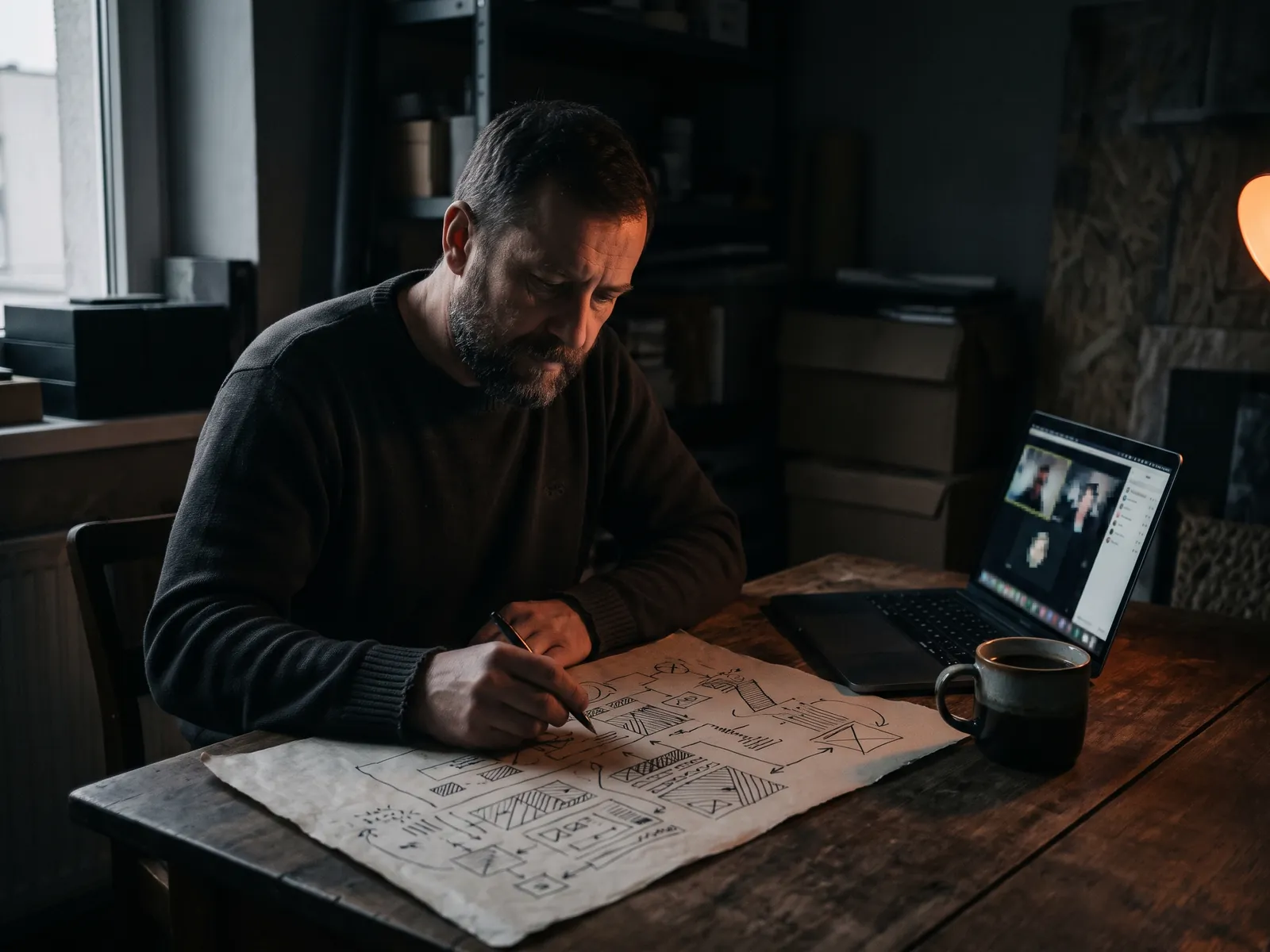
Before you sign with a web designer, ask about ownership, scope, deadlines, payments, tracking and life after launch. The right questions take twenty minutes on a call and protect you from the most common horror stories: the site you cannot edit, the domain registered to someone else, the project that drifts for months.
Here are the twelve questions to ask a web designer, why each one matters, and what a good answer sounds like. I answer them for my own projects too, so you can see what I mean.
Ownership and control
1. Who will own the domain, hosting account and code?
Why it matters: if the designer registers the domain in their own name, you depend on them forever. Some builders also keep the site in their account, so leaving means starting over.
Good answer: "Everything is registered to your business, with your login. I get access as a user." That is how I work: domain, hosting, code and analytics are in the client's name.
2. Can I move the site to another developer later?
Good answer: "Yes. You get the code or an export, and here is how the move would work." Be careful with "Why would you want to?". That is not an answer.
3. Can I edit the content myself?
Why it matters: prices, hours, photos and services change. If every edit needs a paid request, the site will go stale.
Good answer: a clear explanation of what you can edit yourself, ideally with a short demo of the editing panel, and a training session included.
Scope and money
4. What exactly is included in the price?
Ask for a list: number of pages, who writes the copy, design rounds, integrations, tracking, redirects from the old site, testing, training, support after launch. A low quote that leaves out copy and tracking is not cheaper.
5. How many rounds of revisions are included, and what counts as one?
Good answer: a number and a definition. I include three rounds of revisions; a round is one consolidated set of comments on a deliverable.
6. How and when do I pay?
Staged payments protect both sides. Paying 100% up front to someone you have never worked with is a risk. My projects are paid in three stages, 30/40/30, or as a monthly subscription.
7. What will it cost me every month after launch?
Hosting, domain, software subscriptions, plugin licenses, maintenance. Ask for the full list, so the site does not come with surprise bills.
Process and deadlines
8. What is the deadline, and is it in the contract?
Good answer: a date for each phase, written into a signed agreement. You can also ask for late-delivery penalties; I am happy to include them.
9. Who will I actually work with?
At an agency, the person on the sales call may not be the person building your site. Ask who writes, designs and codes, and who answers your messages. With me, it is the same person all the way: me.
10. How do we communicate, and how fast do you reply?
Especially with remote designers, ask about channels, time zones and reply times. I answer within one business day, and calls are on Zoom in the US morning, Eastern Time.
Results and after launch
11. How will we know if the site works?
Good answer: conversion tracking on forms and calls, Google Analytics 4 set up, and a simple way to see leads by source. A designer who only talks about looks is not thinking about your business.
12. What happens after launch?
Ask about bug fixes, support, how long help lasts and what ongoing care costs. Also ask what happens if the designer becomes unavailable; with your name on every account, the answer is "you hire someone else and they take over".
How to compare two proposals
Once you have answers from two or three designers, put them side by side. Prices alone rarely tell you much, because each proposal covers a different scope. A simple table makes the gaps visible:
| Question | Designer A | Designer B |
|---|---|---|
| Domain and code in my name? | ||
| Copy included? | ||
| Number of pages | ||
| Revision rounds | ||
| Tracking and conversion setup | ||
| Deadline in the contract | ||
| Payment stages | ||
| Monthly costs after launch | ||
| Support after launch |
Fill it in honestly. The cheaper proposal often has blanks in the copy, tracking and ownership rows, and those blanks tend to become extra invoices later. The more expensive one is not automatically better either; sometimes it includes features you will never use. Pick the proposal that covers what your business needs, from someone who answered clearly and quickly.
Red flags to watch for
- They register the domain in their own name "to make it easier".
- No written agreement, or a contract without dates.
- 100% payment before any work.
- Vague answers about who writes the copy.
- Guarantees of first place on Google. Nobody can promise that honestly.
- Pressure to sign today.
A note on hiring someone remote or overseas
Many US owners have hired offshore freelancers and been burned: missed deadlines, silence, a half-finished site held hostage. Distance is not the real issue; the absence of structure is. Whoever you hire, insist on a written agreement with dates, staged payments, accounts in your name and a clear communication channel.
I work from Europe, so I take this seriously. North American clients so far are in Canada, for example Sunline Cleaning in Winnipeg, and the structure is the same for everyone: agreement, deadlines, your accounts, direct contact with me.
Questions the designer should ask you
A good designer interviews you as much as you interview them. Expect questions about your best customers, your most profitable services, your service area, what a good lead looks like and who will approve the work. If a designer quotes a price without asking anything about your business, the price is for a generic website, and that is what you will get.
Use these questions on me
Book a free 30-minute call and ask all twelve. You can also read how I work in advance, look at my web design services, and see what you would pay on the website pricing page. If you have not written a brief yet, my guide on how to write a website brief makes the conversation faster.
Let’s talk
about your business
Before the call I review your website and ads. After the call you get an action plan and a price range in writing.

12+ years in online marketing, 100+ clients. I build websites, Google Ads and Meta ads campaigns, CRMs and automations for small and mid-sized businesses. About me →
Hiring a
web designer
Should I hire a freelancer or an agency for my website?
Both can work. A freelancer usually means direct contact with the person doing the work and lower overhead; an agency offers more people but more layers. What matters more is structure: a written agreement, clear scope, deadlines, staged payments and accounts in your name.
Is it safe to hire a web designer outside the US?
It can be, if the basics are in place. Insist on a written contract with dates, staged payments, your own name on the domain and hosting, and a clear communication schedule. Ask how time zones are handled and who exactly does the work.
What should a web design contract include?
Scope with a page list, what is excluded, deliverables and deadlines per phase, revision rounds, payment stages, ownership of domain, code and content, what happens after launch, and how either side can end the agreement. Have your attorney review anything unusual.
How do I check a web designer's past work?
Look at live sites they built, not only screenshots. Open them on your phone, test a form, check speed. Ask what part they did: design, copy, code or all of it. Real case studies with clear descriptions of the work are more useful than a gallery of mockups.
Bring your 12 questions
to a free call
Book 30 minutes on Zoom at a time that suits your time zone. Ask anything about ownership, price, deadlines and support, and get straight answers.